


 Ingresar


US and Argentina to connect critical minerals, energy and infrastructure
By Estudio Chaloupka
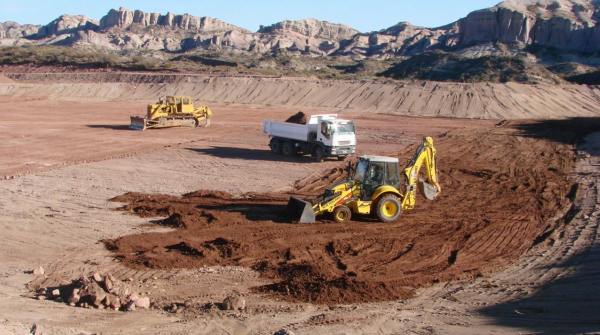
The United States and Argentina have launched the Andes-Atlantic Corridor, a bilateral initiative designed to modernize transportation, energy and digital infrastructure connecting Argentina's resource-rich regions with Atlantic ports and Western markets, while strengthening supply chains for critical minerals and energy.
The initiative was launched on September 23 in New York by U.S. Deputy Secretary of State Christopher Landau and Argentine Foreign Minister Pablo Quirno on the margins of the United Nations General Assembly High-Level Week. The two governments describe the corridor as a long-term framework for public and private investment rather than a single infrastructure project.
According to the joint statement, the corridor is intended to connect Argentina's critical-mineral-rich northwest and the Vaca Muerta energy basin with Atlantic ports and Western markets. The infrastructure contemplated includes railways, waterways, ports, pipelines, power-generation and transmission facilities, as well as digital infrastructure. The governments say the objective is to increase exports of minerals, oil and gas while addressing transportation and energy bottlenecks.
Critical minerals are one of the principal components. The U.S. government specifically identifies lithium and copper among the resources whose supply chains could be strengthened through the corridor. Argentina has become an increasingly important lithium producer and has a pipeline of copper projects in its Andean provinces, while the development of those resources depends in part on transportation, energy and export infrastructure.
The corridor also incorporates Argentina's energy sector, particularly Vaca Muerta. The bilateral framework foresees U.S. investment, technology and financial instruments to support the commercial development of the shale formation. The tools mentioned include direct loans, loan guarantees and insurance products designed to mobilize U.S. capital, equipment and service providers.
Transportation is another central component. The United States and Argentina intend to identify priority projects involving railways, waterways and ports. The U.S. government says American companies will have opportunities to participate as bidders or subcontractors in infrastructure projects developed under the corridor.
The initiative is connected to projects already being developed by Argentina. The U.S. fact sheet points to the Hidrovía waterway, freight railway concessions involving the Belgrano, San Martín and Urquiza lines, and potential rail connections linking Vaca Muerta with Bahía Blanca and ports connected to the Paraná-Paraguay waterway system. Argentina awarded a 25-year concession for the Hidrovía in June 2026, while tenders for 50-year freight railway concessions were launched in August.
Digital infrastructure forms a separate pillar of the corridor. The U.S. government identifies modernization of the ARSAT fiber-optic network, submarine cables, fiber networks, satellite connectivity, telecommunications infrastructure and potential AI data centers among the areas where investment opportunities could emerge. The bilateral statement emphasizes the use of trusted technology with the stated aim of ensuring efficiency and cybersecurity.
The financing framework associated with the initiative is broader than the corridor itself. The Export-Import Bank of the United States and Argentina signed the U.S.-Argentina Build the Future Framework, which could provide up to US$7 billion in financing through 2027 for projects aimed at infrastructure development and productive capacity. The U.S. International Development Finance Corporation and the U.S. Trade and Development Agency are also identified as potential sources of financing and technical assistance.
The US$7 billion figure should therefore not be interpreted as a single investment in the Andes-Atlantic Corridor or as a committed amount for one mining or infrastructure project. It is the maximum financing contemplated under the broader Build the Future Framework for eligible projects. The corridor is intended to create a pipeline through which some of those financial instruments could support infrastructure, energy, mining and technology projects.
The initiative also has a multilateral dimension. Washington identifies the Andes-Atlantic Corridor as the first Partnership for Global Infrastructure and Investment (PGII) corridor in the Western Hemisphere. The G7-backed framework has also been used for other strategic economic corridors, including the Lobito Corridor in Africa, the Luzon Economic Corridor in the Philippines, the India-Middle East-Europe Economic Corridor and the Trans-Caspian Trade Route.
For Argentina, the corridor fits with measures adopted to attract large-scale investment. The U.S. fact sheet specifically refers to the Incentive Regime for Large Investments, known as RIGI, which provides long-term tax, trade and foreign-exchange benefits for qualifying investments in designated sectors. Mining, energy and infrastructure projects are among the areas affected by the investment regime.
The mineral component also connects the corridor with the broader U.S.-Argentina cooperation on critical minerals. The two countries have been working on supply-chain issues involving lithium, copper and other strategic resources, as Washington seeks to diversify sources of materials used in batteries, electrical infrastructure, advanced technologies and other industrial applications. The Andes-Atlantic Corridor adds the physical infrastructure needed to connect those resources with processing facilities and export routes.
From an intellectual property perspective, the initiative is relevant primarily through its emphasis on technology, digital infrastructure, advanced industrial projects and critical-mineral supply chains rather than because the corridor establishes a new IP regime. Projects involving mining technology, energy systems, telecommunications, artificial intelligence, data centers and other infrastructure can involve patents, software, trade secrets, licensing arrangements and technology-transfer agreements. The bilateral statement, however, does not announce specific changes to Argentina's intellectual property legislation.
The reference to trusted technology and cybersecurity is particularly relevant to the digital component. The U.S. and Argentine governments say that new infrastructure will be built on a technological foundation intended to ensure efficiency and cybersecurity, while the fact sheet identifies telecommunications, fiber networks, satellite connectivity, submarine cables and AI data centers as potential areas for investment.
The corridor is also being developed against a regional backdrop in which infrastructure, customs and trade facilitation are increasingly being addressed together. Argentina recently adopted measures to digitize international road-transport procedures and promote real-time information exchange among customs administrations under the International Land Transport Agreement, involving Bolivia, Brazil, Chile, Paraguay, Peru and Uruguay. Separately, the Inter-American Development Bank has highlighted the importance of customs coordination, information sharing and border management for South American economic corridors.
The next stage will involve identifying concrete projects and connecting them with financing. According to the U.S. fact sheet, a U.S. delegation from the State Department, DFC and EXIM is scheduled to travel to Buenos Aires, Jujuy and Salta in October to identify and advance potential transactions. The two countries also plan roadshows connecting U.S. companies with investment opportunities and concession tenders.
Estudio Chaloupka

Estudio Chaloupka Industrial Property is a professional firm specialized in Intellectual Property, existing as of more than 50 years (under different names), with a staff of professionals with a high level of technical and legal expertise in trademarks, patents, models and industrial designs, copyright, software, licensing, domain names and litigation.
The firm provides its clients - pertaining to the fields of pharmaceuticals, chemicals including agrochemicals, banking, luxury goods, equipment and supplies for the oil industry, footwear, garments, food and drinks, hotels- with a complete range of intellectual property services not only in Argentina but also throughout the world.
Our professional team is committed to providing clients with high quality services, tailored to their particular needs, allowing them to achieve their professional and business goals.
