


A sound investment in a rough economy: why IP matters in Puerto Rico
By Víctor Rodríguez-Reyes, Ferraiuoli LLC
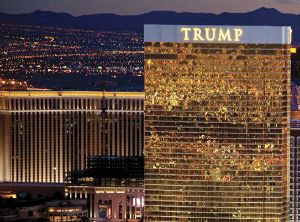
It is no secret that the economy in Puerto Rico has seen better times. A natural response in the face of uncertainty is for businesses to dig in, cut costs, and think short term. But being too conservative can lead to missed opportunities and progressive irrelevance. In the modern economy, intellectual property is fundamental to achieve or sustain competitiveness. A trademark can be more valuable than most tangible assets. It can also be a means to hedge risks. Businesses should seek to improve their bottom line by investing in their brand as a way to distinguish themselves from competitors. Once established, a brand can be licensed to a third party for using in exchange for royalties. Through licensing, the owner of a brand can obtain profits from a venture without incurring in the risks associated with the venture. An example is the Trump® brand.
An article recently published by the Washington Post describes how Donald Trump has received revenue from ventures bearing his name, but for which he did not invest any money or shared any financial risk (1). The article discusses how Trump has moved away from making money by risking capital in real estate to licensing his brand on real estate owned by third parties. One example is the Trump International Gulf Club. This golf course built in Puerto Rico is now facing financial trouble and has filed for bankruptcy. Trump received annual revenue from the venture, but had no involvement in the financing, according to the article (2).
Trump has recently claimed that his licensing accounts for $3.3 billon, the largest single source of his net worth (3). Of course, building a brand requires that the owner invest in it to develop a goodwill and pursue trademark infringers, as Trump had done in the past (4). But there is little risk for a business to invest in its goodwill and in differentiating itself from its competitors. Businesses in Puerto Rico should consider that if tycoons like Trump are moving away from owning buildings to developing intellectual property, why should not they do the same?
(1) Tom Hamburger and Rosalind S. Helderman, How Donald Trump cashes in even when his name-brand properties fail, Washington Post, July 23, 2015, http://www.washingtonpost.com/politics/how-donald-trump-can-make-money-even-when-trump-branded-properties-fail/2015/07/23/1ff64854-2ef1-11e5-8353-1215475949f4_story.html, last visited August 3, 2015.
(2) Id.
(3) Id.
(4) Id.
Ferraiuoli LLC

Ferraiuoli LLC (FLLC) was founded in 2003 by the late Blas Ferraiuoli-Martínez, Eugenio Torres-Oyola and María Marchand-Sánchez. This group was then joined in 2004 by Fernando J. Rovira-Rullán, thus forming the founding core of FLLC. FLLC has grown exponentially since its founding from a law firm with three attorneys and a support staff of three to its current size of 54 attorneys with a support staff of 38. Also, FLLC has grown from initially being known as an intellectual property and corporate law boutique law firm to a multiservice law firm that handles most matters relevant to a business while continuing to earn praise for its leading intellectual property and corporate practices.
FLLC has been ranked as a leading law firm in Puerto Rico by the professional publication Chambers Latin America in intellectual property, corporate, bankruptcy, labor & employment, real estate, and tax law. Moreover, 17 FLLC partners have been ranked as leaders in their field by the same publication. 4 FLLC partners are ranked as leaders in Intellectual Property, no other firm has more than 2. This recognition in such a short period of time is a tribute to FLLC’s business model.
FLLC prides itself in doing its work faster and more cost-efficiently yet with the same quality as that of its main competitors. The founding name partners are available at all times to attend to client matters. Their work ethic sets the tone for the rest of the firm. FLLC’s founders’ goal has been steady from the outset: become one of the premier multiservice law firms in Puerto Rico.
