


Argentina's Lower House Approves Accession to Global Patent Treaty
By Estudio Chaloupka
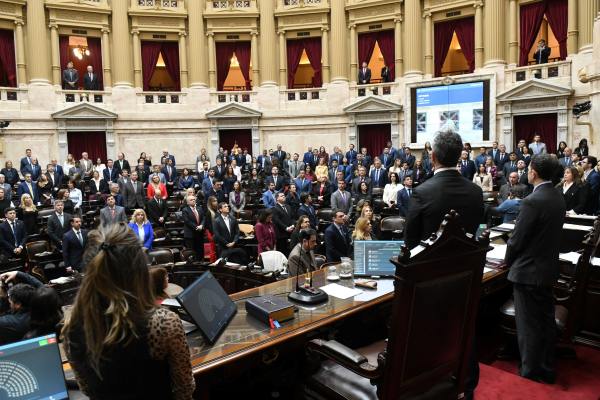
Argentina's Chamber of Deputies approved, in the early hours of August 27, 2026, the country's accession to the Patent Cooperation Treaty, an international agreement administered by the World Intellectual Property Organization that allows inventors to seek patent protection in more than 150 member countries through a single application.
The lower house passed the measure by a vote of 147 in favor to 93 against, with no abstentions, in a session that both approved the bill in general and voted on its specific articles. Because deputies introduced a modification to the treaty's original text, the bill must now return to the Senate, which is constitutionally required to review any changes made by the chamber that did not originate the legislation.
The Patent Cooperation Treaty itself dates back to 1970, when Argentina originally signed it in Washington, and it was later amended in 1979 and modified again in 1984. Argentina's Senate had already approved ratification of the treaty in 1998, but the bill remained stalled in the Chamber of Deputies for nearly three decades before Wednesday's vote. Until this year, Argentina was the only member of the Group of 20 major economies that had not formally joined the treaty system, despite having signed it more than fifty years ago.
The push to finally ratify the treaty is tied directly to a bilateral trade agreement Argentina signed with the United States on February 5, 2026, in Washington, between Argentine Foreign Minister Pablo Quirno and U.S. Trade Representative Jamieson Greer. That agreement, the Reciprocal Trade and Investment Accord, includes a dedicated chapter on intellectual property that explicitly commits Argentina to submit the Patent Cooperation Treaty to Congress for ratification.
The treaty had originally been due for ratification by April 30, 2026, under the terms of that commitment, but the Argentine government delayed the vote while it sought guarantees from the U.S. administration regarding the reduction to zero percent of tariffs on 1,675 tariff lines, an implementation that had been held up by the U.S. Supreme Court. That guarantee was formalized in July, clearing the way for the August vote.
The version approved by deputies includes a reservation excluding Chapter II of the treaty, the section that governs international preliminary examination, under which foreign patent offices can issue non-binding technical opinions on an invention's patentability that feed into national review processes. The reservation was added following objections from Argentina's domestic pharmaceutical industry, represented by the Argentine Chamber of Pharmaceutical Laboratories, which argued that full accession to Chapter II could delay the entry of generic drugs and increase medicine prices.
The American Chamber of Commerce in Argentina had submitted a formal note to the Chamber of Deputies arguing in favor of retaining Chapter II, saying it would provide a more robust technical and legal evaluation at an early stage of the international process. Other countries, including the United States, Switzerland, France, South Korea, and Spain, initially joined the Patent Cooperation Treaty system under the same kind of reservation, adhering only to Chapter I before later accepting Chapter II, and Uruguay followed the same path when it ratified the treaty in late 2024.
Under the treaty's basic mechanics, an applicant can file a single international application that is recognized across all member states, but the treaty does not create a single worldwide patent. Each national patent office retains final authority to grant or reject a patent based on its own domestic law and technical criteria; in Argentina's case, that authority rests with the National Institute of Industrial Property. Because deputies changed the treaty's text by adding the Chapter II reservation, the bill now returns to the Senate for a final vote before Argentina's accession to the Patent Cooperation Treaty can be completed and take legal effect.
Estudio Chaloupka

Estudio Chaloupka Industrial Property is a professional firm specialized in Intellectual Property, existing as of more than 50 years (under different names), with a staff of professionals with a high level of technical and legal expertise in trademarks, patents, models and industrial designs, copyright, software, licensing, domain names and litigation.
The firm provides its clients - pertaining to the fields of pharmaceuticals, chemicals including agrochemicals, banking, luxury goods, equipment and supplies for the oil industry, footwear, garments, food and drinks, hotels- with a complete range of intellectual property services not only in Argentina but also throughout the world.
Our professional team is committed to providing clients with high quality services, tailored to their particular needs, allowing them to achieve their professional and business goals.
