


 Ingresar


El Salvador Records Fastest Export Customs Clearance in Latin America in IDB Report
By Eproint
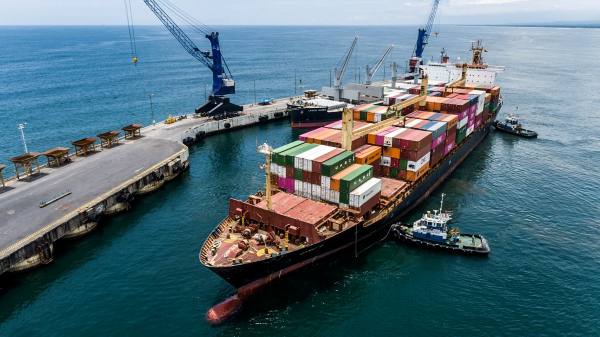
In its December 2025 report Markets for Development: Improving Lives Through Competition, the Inter‑American Development Bank (IDB) included comparative data on export customs clearance times across Latin America and the Caribbean. The report examines market structures in the region, noting that high concentration and limited competition in many sectors are associated with slower productivity growth, restricted innovation, and higher costs for consumers and firms. It presents a range of indicators on administrative efficiency, regulatory barriers, and procedural delays that affect market functioning across countries.
Among the cross‑country indicators presented in the report is the average time required for export goods to clear customs. According to the data, El Salvador had the shortest average export clearance time in 2025, with shipments completing the customs process in roughly three to four days. This measure reflects the period from a shipment’s final point of exit within the country to its departure from customs control. In contrast, the regional average measured in the same dataset is around ten days. Countries such as Uruguay and Guatemala also appear in the faster end of the distribution, while others, including Brazil, Guyana and Suriname, show average clearance times exceeding ten days.
The IDB report treats customs clearance performance as one among several indicators of administrative efficiency that can influence broader market competitiveness. Delays in customs processing are categorized as non‑tariff barriers that add to the cost of trade logistics and may affect the ability of firms — particularly small and medium‑sized exporters — to respond to delivery schedules and market demands. Faster clearance times are interpreted in the report as reducing one form of procedural friction that can constrain trade and, by extension, competitive pressure in domestic and international markets.
Data in the report are drawn from a long‑term series of customs performance figures spanning several years, and comparisons are presented across countries in the region. The IDB notes that differences in administrative practices, levels of investment in infrastructure, and adoption of facilitation measures such as electronic single windows and risk‑based inspections are among the factors that contribute to variations in clearance times.
El Salvador’s placement at the faster end of the customs clearance spectrum is reflected in the country’s reported efforts in recent years to modernize border operations. Measures referred to in public sources include upgrades at border crossing points and the implementation of procedural changes intended to streamline customs documentation and controls. These reforms are visible in points of entry shared with Guatemala and Honduras and have been documented in project descriptions linked to trade facilitation initiatives supported by multilateral finance.
The IDB report does not link customs clearance times directly to the broader findings on competition in product and service markets, but it lists administrative and procedural delays — including those at the border — as examples of barriers that can raise costs and limit the effective functioning of markets. The clearance time data form part of a larger analytical framework that also includes a new set of comparative competition indicators, which the IDB says can help policymakers identify bottlenecks and design reforms aimed at increasing contestability, lowering costs and expanding opportunities for firms.
Eproint

Whether your company is big or small, at Eproint you are our priority and we can take care of everything regarding legal processes to create and protect your brands, and provide you with an Intellectual Property strategy to achieve your goals.
In El Salvador, Practice Head Edy Guadalupe Portal is a partner at Eproint and has more than 25 years of experience in Intellectual Property. Since 1995, she has been recognized as the Salvadoran voice of Intellectual Property protection for always informing the IP community about changes to IP law and international treaties.
During her career, Mrs. Portal has helped numerous international law firms and in-house counsel with all facets of their IP matters in El Salvador and Central America. Her extensive practice includes work in trademarks, patents, industrial designs, utility models, copyrights, unfair competition, foreign investment, regulatory law/health registrations, licensing, franchising, appellations of origin, geographical indications, IP litigation, fashion law, new technologies, data privacy, cybersecurity, domain names, entertainment law, advertisement law, trade secrets, valuation of intangibles, and IP due diligence. She is also recognized for the great anti-piracy and anti-counterfeiting results she has delivered for her clients. She also helps coordinate Latin America Intellectual Property Protection for the firm.
