


 Ingresar


El Salvador Scales Back State Involvement in Bitcoin Under IMF Agreement
By Edy Portal, Eproint
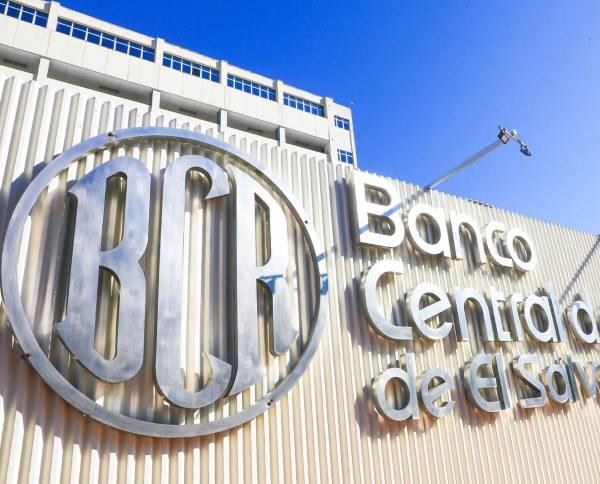
As part of its agreement with the IMF, El Salvador has committed to halt further public-sector Bitcoin accumulation and substantially unwind the government’s involvement in its Chivo digital wallet. The changes mark a significant shift in the country’s approach to crypto assets and could provide greater regulatory predictability for international investors.
El Salvador has agreed to further reduce the government’s involvement in Bitcoin and other crypto assets as part of the latest review of its US$1.4 billion financing program with the International Monetary Fund (IMF). Under the staff-level agreement announced on September 3, the government is not expected to accumulate additional Bitcoin beyond documented private donations, while majority ownership and operational control of the state-backed Chivo electronic wallet have been transferred to a private operator. The agreement remains subject to approval by the IMF Executive Board.
The measures represent a significant change from El Salvador’s original Bitcoin strategy, introduced in 2021. Under the initial framework, Bitcoin was granted legal-tender status and the government became directly involved in the acquisition and use of the cryptocurrency. The IMF’s financing program, approved in February 2025, subsequently established a series of conditions designed to reduce the risks associated with the country’s Bitcoin project and limit the exposure of public finances and the financial system to crypto-asset volatility.
The IMF’s program specifically called for the government’s participation in Chivo to be unwound and for public-sector involvement in Bitcoin-related activities, transactions and purchases to be confined. The Fund also required reforms making Bitcoin acceptance by private-sector businesses voluntary, while requiring taxes to be paid in US dollars. In its latest review, the IMF said that public participation in Chivo had been substantially unwound and that the government now retains only a minority stake and custodial responsibilities for customer assets.
The treatment of Bitcoin holdings has also become more closely linked to transparency and public-sector risk management. According to the IMF, Salvadoran authorities provided documentation indicating that Bitcoin accumulated since the first program review came from private donations and did not involve public resources. Going forward, the agreement provides that no additional accumulation beyond those documented donations is expected. The authorities have also agreed to strengthen governance and risk-management arrangements for government-owned crypto assets and to modernize the legal, regulatory and supervisory framework governing digital assets.
For international investors, the changes are relevant because they reduce the extent to which the Salvadoran state is directly exposed to Bitcoin and establish clearer boundaries between government finances and crypto-asset activities. The IMF has linked these reforms to broader objectives involving financial stability, consumer and investor protection, transparency and financial integrity. The Fund’s framework also calls for stronger regulation and supervision of crypto-asset activities, including requirements addressing market integrity, cybersecurity, anti-money laundering controls and other risks.
The shift does not amount to a complete withdrawal of Bitcoin or crypto assets from El Salvador. Rather, the government is moving from a model of direct public participation toward a more limited and regulated role. The country continues to maintain government-owned crypto assets, while the IMF agreement establishes restrictions on further accumulation and calls for greater transparency and risk controls. This distinction is relevant for companies and investors assessing El Salvador because the regulatory environment is becoming less dependent on direct state participation in Bitcoin and more closely aligned with conventional financial-sector oversight and international standards.
Eproint

Whether your company is big or small, at Eproint you are our priority and we can take care of everything regarding legal processes to create and protect your brands, and provide you with an Intellectual Property strategy to achieve your goals.
In El Salvador, Practice Head Edy Guadalupe Portal is a partner at Eproint and has more than 25 years of experience in Intellectual Property. Since 1995, she has been recognized as the Salvadoran voice of Intellectual Property protection for always informing the IP community about changes to IP law and international treaties.
During her career, Mrs. Portal has helped numerous international law firms and in-house counsel with all facets of their IP matters in El Salvador and Central America. Her extensive practice includes work in trademarks, patents, industrial designs, utility models, copyrights, unfair competition, foreign investment, regulatory law/health registrations, licensing, franchising, appellations of origin, geographical indications, IP litigation, fashion law, new technologies, data privacy, cybersecurity, domain names, entertainment law, advertisement law, trade secrets, valuation of intangibles, and IP due diligence. She is also recognized for the great anti-piracy and anti-counterfeiting results she has delivered for her clients. She also helps coordinate Latin America Intellectual Property Protection for the firm.
