


 Ingresar


EU Council Gives Final Approval to Modernised Trade Agreement With Mexico
By Goodrich Riquelme y Asociados
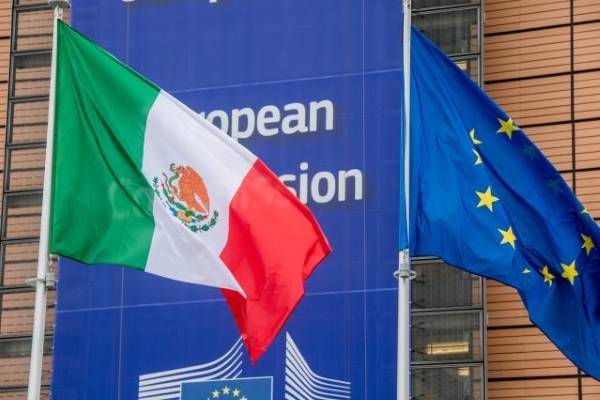
The Council of the European Union adopted, on July 14, 2026, the decision to formally conclude the Interim Agreement on Trade (ITA) between the European Union and Mexico. The move follows the agreement's signature on May 22, 2026, during the eighth EU-Mexico summit, and the consent given by the European Parliament during its plenary session on July 8, 2026. With this decision, the EU has completed its internal process for the ITA and confirmed that it has finished the procedures required for the agreement to take effect.
Helen McEntee, Ireland's Minister for Foreign Affairs and Trade, said the modernised agreement strengthens one of the bloc's closest partnerships in Latin America and demonstrates that cooperation can deliver greater opportunities and certainty for businesses on both sides. She added that deepening ties with trusted partners carries added weight amid growing geopolitical uncertainty, and pointed to ongoing EU trade negotiations with Malaysia, the Philippines, Thailand and the United Arab Emirates, as well as the implementation of recently concluded talks with Indonesia and India.
The ITA updates the trade pillar of the broader EU-Mexico Global Agreement, which has governed bilateral relations since it entered into force in 2000. According to the Council, the revised framework is expected to benefit more than 45,000 EU companies that export to Mexico, the vast majority of them small and medium-sized enterprises. It will improve market access by eliminating most remaining customs duties, expanding opportunities in services, investment and public procurement, and reducing other barriers to trade.
On intellectual property specifically, the Council stated that the agreement strengthens the protection of European geographical indications, the legal designations used to safeguard regional food and beverage names, such as specific cheeses, wines and spirits, from imitation in Mexican markets. The ITA also expands cooperation on digital trade, customs and trade facilitation, competition policy and critical raw materials, alongside its intellectual property provisions.
Because the ITA falls within the EU's exclusive competence, it does not require ratification by individual member states. Under its terms, the agreement will enter into force on the first day of the second month following notification by both parties that they have completed their respective internal procedures. Mexico is expected to conclude its own ratification process after the summer. Once both sides exchange those notifications, a two-month period will follow to allow companies to prepare for the new rules. The ITA is designed to function as a stand-alone agreement and will cease to apply once the full modernised EU-Mexico Global Agreement enters into force.
The modernization process dates back to 2016, when the Council authorized the opening of negotiations to update the original Global Agreement to reflect changes in the global economic and political landscape. Those negotiations concluded on January 17, 2025. The Council authorized the signature of the ITA on May 11, 2026, ahead of the summit where it was formally signed eleven days later.
Mexico is currently the EU's second-largest trading partner in Latin America, while the EU ranks as Mexico's third-largest trading partner overall. Bilateral trade already amounts to nearly €87 billion in goods, based on 2025 figures, and more than €29 billion in services, based on 2024 data. Between 2014 and 2024, trade in goods between the two partners grew by more than 75 percent, while trade in services grew by over 171 percent.
Goodrich, Riquelme y Asociados

Goodrich has a long tradition of standing alongside its clients when helping them make their business objectives a reality. By means of a cross-practice among service areas and industry teams, our carefully trained lawyers achieve an innovative approach towards the rendering of contemporary legal services tailored to the demanding business community worldwide.
We ensure that our clients are competently represented wherever their businesses take them. This is why, in addition to our network of correspondents in Mexico and our own office in Paris (since 1971), Goodrich actively participates as founder firm of the Bomchil Group, an association of independent law firms with offices in practically every Latin American country. Today, Goodrich has a professional and administrative staff of over 250. In our firm we are constantly striving to renew ourselves and in being prepared to face the ever-changing legal challenges that lie ahead. We are a firm of young lawyers with the highest professional and ethical standards.
