


 Ingresar


Free Trade Zones Drive Dominican Republic's Economic Growth in 2026
By Guzmán Ariza, Attorneys at Law
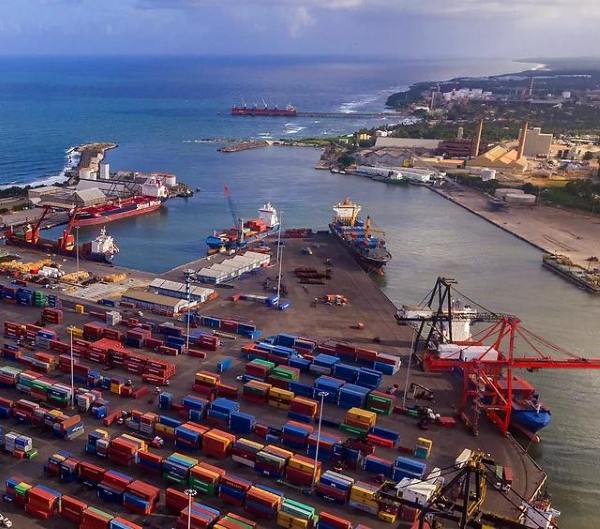
The Dominican Republic's free-zone sector posted its strongest results in years during early 2026, and President Luis Abinader used an international stage to make the case that the country stands among the best investment decisions in the hemisphere.
According to the Central Bank's first-quarter data, the Dominican economy grew 4.1% in the first quarter of 2026 compared to the same period in 2025, with manufacturing in free trade zones standing out as a key driver of that expansion.
In March alone, free-zone manufacturing grew 7.8%, while overall economic activity that month expanded 5.1% year over year, again led largely by the sector. CNZFE executive director Johannes Kelner noted that beyond the 7.8% manufacturing growth, service-exporting free-zone companies add roughly 38,000 jobs and more than a billion dollars in exports, suggesting the regime's total impact on the economy could be closer to 10% once fully measured, and said talks are underway with the Central Bank to refine that calculation.
Foreign direct investment also showed strength in the quarter. Total FDI reached USD 1,536.7 million in the first quarter of 2026, with the free-zone sector capturing 7.6% of that amount, equivalent to USD 117 million. Free-zone exports hit their own record for a March period, reaching USD 841.2 million, an 8% increase year over year.
Weeks later, Abinader carried that momentum to Panama, where he addressed business leaders and investors at the 12th World Free Zones Congress. In a keynote titled "Dominican Republic Free Zones: Engine of Productive Transformation and Global Competitiveness," he argued that in a global environment reshaping supply chains and investment patterns, the Dominican Republic is not merely holding steady but pulling ahead, telling the audience the country is "one of the best investment decisions in the hemisphere" today.
He framed the country's free-zone model as more than industrial parks, describing it instead as a full investment ecosystem spanning advanced manufacturing, global services and the digital economy, and pointed to more than 200,000 jobs generated by the free-zone sector, which accounts for over 60% of national exports, spread across more than 850 companies operating in industrial parks nationwide, in industries ranging from medical devices and electrical manufacturing to BPO, tobacco and logistics.
On the investment side, Abinader cited more than USD 35,000 million in accumulated foreign direct investment over the past decade, along with a 2025 record above USD 5,000 million in FDI, and pointed to projects tied to Google and NVIDIA, as well as a planned spaceport in Pedernales, as signs that global technology capital is taking a longer-term interest in the country. He also highlighted the Dominican Republic's trade-agreement network, which he said gives producers preferential access to more than 1,200 million consumers across markets including the United States, Europe, Central America and the Caribbean, and described the country's free-zone framework, anchored in Law 8-90, as combining legal stability with a shift from cost-based competition toward more advanced manufacturing and technological capability.
Guzmán Ariza, Attorneys at Law

Guzmán Ariza is a leading full-service law firm in the Dominican Republic, consistently ranked among the country’s top-tier firms by the most prominent global legal directories such as Chambers and Partners and The Legal 500.
With ten strategically located offices across the nation's principal business and tourism hubs, we are uniquely positioned to support clients in seizing opportunities within the largest and fastest-growing economy in Central America and the Caribbean.
Our multilingual team is well-versed in advising international clients across a broad spectrum of practice areas. In the field of intellectual property, we offer robust counsel and representation in both commercial transactions and litigation. Our services cover trademark and trade name protection, copyright and patent registration and enforcement, as well as licensing, assignments, and the transfer of IP rights.
Guzmán Ariza is globally connected through active memberships in prominent international legal networks, enabling us to effectively support cross-border matters and multinational transactions.
