


 Ingresar


Guatemala’s Incentives Law Supports Largest Sustainable Electricity Expansion in Country’s History
By Mayora IP
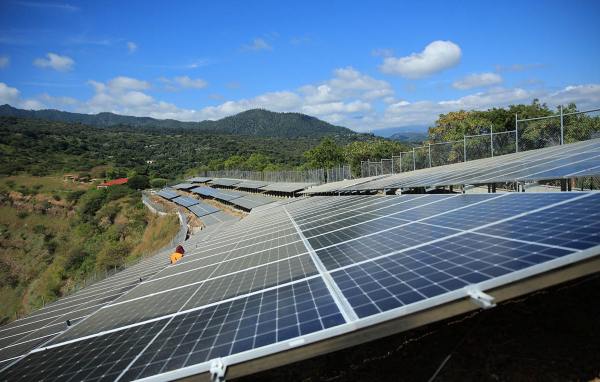
Guatemala is advancing a significant phase in its energy sector through the application of its long-standing Law on Incentives for the Development of Renewable Energy Projects (Decree 52-2003), which is now playing a central role in what authorities describe as the largest expansion of the national electricity system in the country’s history.
The law, originally enacted in 2003, provides a framework of fiscal and customs incentives designed to promote investment in electricity generation from renewable sources such as solar, wind, hydroelectric and geothermal energy. Under this legal regime, companies that qualify can receive exemptions from import duties, value-added tax (VAT) and income tax for up to ten years, covering both pre-investment and construction phases as well as the commercial operation period of approved projects.
Authorities report that, as of late 2025, 163 renewable energy projects had been certified for these incentives by the Ministry of Energy and Mines. These projects form part of broader plans to diversify Guatemala’s energy generation matrix and support sustainable development objectives.
The incentives law is intended to complement the Plan of Expansion of Generation (PEG-5), a major public tender process aimed at adding between 1,400 and 1,500 megawatts (MW) of new generating capacity to the national grid. According to official schedules, technical offers for the PEG-5 process were set to open in February 2026, and the combination of private investment with supportive policy instruments like the incentives law is expected to lower barriers to entry for renewable generation and encourage participation from developers and investors.
Guatemala’s renewable energy potential is considered significant. The country already produces a substantial share of its electricity from hydropower and biomass, and there is growing interest in expanding other renewable technologies, including solar and geothermal, as part of a strategy to enhance energy security and meet projected demand growth. National policy frameworks also point toward diversified power generation and sustainable development as key goals for the medium and long term.
Mayora IP

MAYORA IP, S.A., a sister firm of Mayora & Mayora, with an established practice for 60 years, takes pride in its unfailing commitment to excellence and for strategically managing, protecting, and enforcing intangible assets.
Driven by the legacy and memory of its founding partner, Eduardo Mayora Dawe, MAYORA IP advises its clients to acquire, manage and protect their intellectual property.
Its team of lawyers and paralegals work in the areas of patents, trademarks, trade dress, trade secrets, domain names and copyrights, and regularly counsels on procurement, prosecution,enforcement, licensing, and litigation.
MAYORA IP is proud to share that after years of providing services in Honduras and in El Salvador, the legacy of its founding partner, Eduardo Mayora Dawe, does not cease to grow.
