


Gucci v Guess: G is for good will
By Laura Beléndez-Ferrero, Ferraiuoli LLC
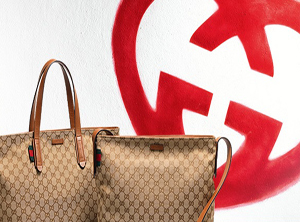
In the early 2000’s, Guess began selling its products (namely shoes and handbags) with designs that emulated Gucci’s famous and iconic design trademarks, such as the stylized G design, the Green-Red-Green stripe design, and the Diamond Motif trade dress, which features a diamond pattern bearing interlocking paired G letters in the corner.
In an effort to safeguard its goodwill, Gucci filed a suit against Guess before the United States District Court for the Southern District of New York in 2009 for trademark infringement, dilution and counterfeit. During trial, testimony was given that demonstrated that Guess designers referenced Gucci when providing manufacturers instructions on the products and the fabrics they wanted. Gucci requested damages in the amount of two hundred million dollars. After three years of litigation, in 2012 the District Court found in favor of Gucci, and determined that Guess had infringed Gucci’s trademarks and that Guess’s marks created a likelihood of dilution. As such, it permanently enjoined Guess and its licensees from using those designs and patterns that infringed Gucci’s above mentioned marks and/or designs. Although Gucci’s expert witness testified that Guess had made more than $200 million in profits for the goods bearing the infringing designs, the District Court found that this calculation was speculative. The District Court determined that Gucci was entitled to $4 million of Guess’s profits, which is a clear departure of the request Gucci made.
While some may argue that Guess got off easy, this decision sends a clear message to the fashion industry. Those that attempt to knock-off another’s goodwill and reputation by copying their designs and trademarks stand to lose more than economic value, they stand to lose their own reputation in an industry where reputation is everything.
Ferraiuoli LLC

Ferraiuoli LLC (FLLC) was founded in 2003 by the late Blas Ferraiuoli-Martínez, Eugenio Torres-Oyola and María Marchand-Sánchez. This group was then joined in 2004 by Fernando J. Rovira-Rullán, thus forming the founding core of FLLC. FLLC has grown exponentially since its founding from a law firm with three attorneys and a support staff of three to its current size of 54 attorneys with a support staff of 38. Also, FLLC has grown from initially being known as an intellectual property and corporate law boutique law firm to a multiservice law firm that handles most matters relevant to a business while continuing to earn praise for its leading intellectual property and corporate practices.
FLLC has been ranked as a leading law firm in Puerto Rico by the professional publication Chambers Latin America in intellectual property, corporate, bankruptcy, labor & employment, real estate, and tax law. Moreover, 17 FLLC partners have been ranked as leaders in their field by the same publication. 4 FLLC partners are ranked as leaders in Intellectual Property, no other firm has more than 2. This recognition in such a short period of time is a tribute to FLLC’s business model.
FLLC prides itself in doing its work faster and more cost-efficiently yet with the same quality as that of its main competitors. The founding name partners are available at all times to attend to client matters. Their work ethic sets the tone for the rest of the firm. FLLC’s founders’ goal has been steady from the outset: become one of the premier multiservice law firms in Puerto Rico.
