


 Ingresar


Honduras Hosts Third International Conference on Science, Technology and Innovation
By Bufete Mejía & Asociados
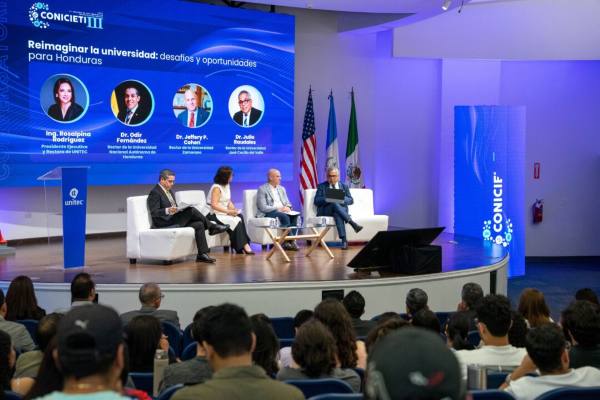
The city of Tegucigalpa served as the meeting point for scientists, students, and academic leaders from across the region during the third edition of the International Conference on Science, Technology and Innovation, known by its Spanish acronym CONICIETI.
Organized by the Universidad Tecnológica Centroamericana (UNITEC), the event brought together researchers from at least a dozen countries to present findings, exchange methodologies, and discuss the practical applications of scientific work in areas ranging from digital health to sustainability. According to UNITEC's official conference page, the gathering forms part of a broader initiative led by the university's Directorate of Research to encourage inquiry-driven collaboration between local and international institutions.
Held over three days at UNITEC's campus in Tegucigalpa, the conference was structured around the theme "Digital Transformation: Challenges and Opportunities for Sustainable Development."
Sessions and workshops covered a wide range of disciplines, including artificial intelligence, robotics, digital health, sustainability, digital storytelling, and fact-checking methodologies. Organizers noted that the event has grown steadily since its first edition, with UNITEC's own communications describing the 2026 gathering as building on a two-day format used in prior years and expanding into additional thematic tracks reflecting the pace of technological change in higher education and research.
The conference opened with a panel discussion among university rectors titled "Reimagining the University: Challenges and Opportunities for Honduras." The panel was moderated by UNITEC's rector, Rosalpina Rodríguez, and included Jeff Cohen, rector of Zamorano; Odir Fernández, rector of the Universidad Nacional Autónoma de Honduras (UNAH) and president of Honduras's Higher Education Council; and Julio Raudales, rector of the Universidad José Cecilio del Valle and president of the National Association of Private Universities of Honduras.
The discussion focused on how universities in the region can adapt to shifting technological and social conditions while preparing new generations of students for evolving academic and professional demands.
Throughout the conference, participants presented 160 research works in both English and Spanish, through in-person and virtual formats, addressing topics that organizers said were intended to generate applicable solutions with real-world impact.
Four international keynote speakers, from Spain, Costa Rica, Guatemala, and Mexico, contributed to the program, alongside specialized workshops on robotics, digital verification techniques, neuromarketing, and sensory experiences in gastronomy. Networking sessions and student-focused activities were also part of the schedule, aiming to connect emerging researchers with established experts across multiple fields of knowledge.
The event concluded with an awards ceremony recognizing outstanding research submissions across several categories, along with the presentation of the Reyna Durón Award for Women in Science. This recognition, established this year according to UNITEC's official announcement, honors the legacy of Dr. Reyna M. Durón, who served as the university's Director of Research and was remembered for her scientific rigor and contributions to strengthening research culture in Honduras.
CONICIETI has grown in scope since its earlier editions. Its second edition, held in 2025, was described by organizers at the time as the largest bilingual international scientific gathering in Honduras, drawing researchers from more than eighteen countries and featuring additional academic sessions on artificial intelligence in higher education, with participants from institutions in El Salvador and Guatemala.
With its third edition now concluded, CONICIETI has positioned itself as a recurring platform connecting academic talent, applied research, and international collaboration in Central America, reflecting a broader effort among regional universities to strengthen higher education systems and support science-based approaches to sustainable development.
Bufete Mejía & Asociados

We are a leading firm in Honduras capable of giving an agile and effective service. Our offices are in San Pedro Sula and Teguacigalpa, and we have associates and correspondents around the world.
We are a specialized firm, that gives integral services in Intellectual Property, such as presentations, support, defense and maintenance of patents, trademarks, copyright, design and geographical indications.
Our Firm has been identified as the best IP firm in Honduras by the prestigious publication Latin Lawyer for the last five years.
