


 Ingresar


How does the TPP influences Peru
By Francisco Espinosa Bellido
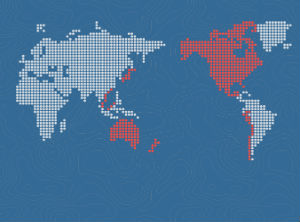
According to Ollanta Humala, president of Peru, the country´s economy will grow and develop thanks to the TPP. "With the partnership various new opportunities will now be open for our economy to increase and diversify", said Humala in a televised message by the Presidency hours after the agreement was set. "The deal will increase the arrival of further foreign investment", he added.
During his message, Humala focused specially on the fact that for the first time Peru was able to negotiate with the United States the inclusion of provisions on traditional knowledge and genetic resources in the partnership chapter of intellectual property.
"These provisions shall have priority for Peru because we are a country with communities who hold ancestral knowledge associated with genetic resources that shall be protected," he said.
Another topic of discussion in Peru regarding the TPP agreement is the drug and medicines chapter. After several specialists and politicians expressed concerns with that matter, Magaly Silva, minister of Foreign Trade, explained that prices will not increase with the signing of the partnership.
"This concern was also talked about in 2008 and 2009, when the United States-Peru Free Trade Agreement was signed. But we have empirical evidence that drug prices increased less than inflation during the four years following the signing of that agreement", said Silva.
With regards to the Data Protection of pharmaceutical products, Peru already has in force since 2009 the Law N°1072 which protects the products resulting from chemical synthesis, and the TPP would include in such protection the biological products.
In reality, the average protection for products resulting from chemical synthesis has been of three and a half years, and not the five-year period of exclusivity of these test data, included in the law.
Espinosa Bellido Abogados

The Industrial Property work of Estudio Francisco Espinosa Bellido Abogados started in 1941 with Dr. Francisco Espinosa Sánchez, father of current senior partner Dr. Francisco Espinosa Bellido and grandfather of current partner Dr. Francisco Espinosa Reboa.
In its 69 years of outstanding legal work the firm has represented the interests of several national and international clients, companies and foreign correspondents obtaining and defending their industrial property rights in Peru, while also displaying an active and remarkable participation in the direction of professional associations in our speciality.
We specialize in counselling, prosecution and litigation in trademarks, patents, trade names, slogans, industrial designs, copyright, domain names, enforcement of those rights as well as unfair competition.
