


 Ingresar


Mexico Launches InnovaFest 2026 as Centerpiece of National Innovation Ecosystem Strategy
By Goodrich, Riquelme y Asociados
Mexico's Secretariat of Economy has formally launched InnovaFest 2026, a multi-city national initiative designed to consolidate a public-private innovation ecosystem by connecting scientific research, technology development, venture capital, and government institutions under a single coordinated structure.
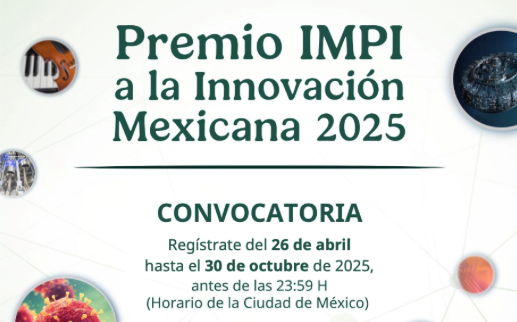
InnovaFest 2026 is a program led by the Secretariat of Economy aimed at strengthening Mexico's national innovation ecosystem through the integration of talent, investment, academia, industry, and government. Its objectives include identifying innovative projects that offer strategic solutions for national development, through prototype exhibitions, conferences, investor networking spaces, and the Premio a la Innovación Mexicana (Mexican Innovation Prize).
The 2026 edition will hold regional events across five cities: Monterrey on May 29, Querétaro on August 21, Guadalajara on September 25, Mérida on November 6, and Morelos on December 11, where the national award ceremony will take place.
In the previous edition, InnovaFest recorded growth of over 30 percent in the number of patents submitted, according to data from the Mexican Institute of Industrial Property (IMPI). Participation rose from fewer than 200 people in prior years to 3,700 in 2025. The target for 2026 is to multiply that figure by five.
The 2026 edition expects at least 20,000 participants, including individuals and institutions of various types.
InnovaFest sits within a wider industrial reorientation articulated by the Secretariat of Economy over the past year. The policy framework aims to transition Mexico from an assembly-based manufacturing model toward one centered on domestic invention — generating intellectual property, scientific innovation, and technology value chains rather than simply processing imported components.
In July 2025, the government and private sector announced the México IA + Inversión Acelerada platform alongside Nvidia, targeting up to nine billion dollars in investment in artificial intelligence infrastructure, including the development of a large language model trained specifically on Mexican cultural and linguistic data.
Goodrich, Riquelme y Asociados

Goodrich has a long tradition of standing alongside its clients when helping them make their business objectives a reality. By means of a cross-practice among service areas and industry teams, our carefully trained lawyers achieve an innovative approach towards the rendering of contemporary legal services tailored to the demanding business community worldwide.
We ensure that our clients are competently represented wherever their businesses take them. This is why, in addition to our network of correspondents in Mexico and our own office in Paris (since 1971), Goodrich actively participates as founder firm of the Bomchil Group, an association of independent law firms with offices in practically every Latin American country. Today, Goodrich has a professional and administrative staff of over 250. In our firm we are constantly striving to renew ourselves and in being prepared to face the ever-changing legal challenges that lie ahead. We are a firm of young lawyers with the highest professional and ethical standards.
