


 Ingresar


New Energy Boost for Paraguay: 22 New Small Hydropower Plants and USD 1.4 Billion in Investment
By Martín Carlevaro, Larissa Recalde & Juan Manuel Ros, BKM | Berkemeyer
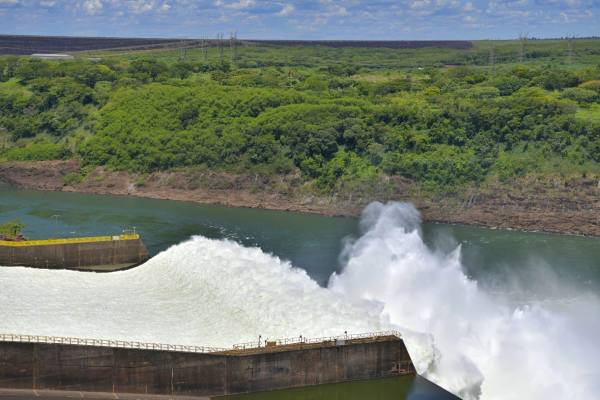
Paraguay is taking a decisive step toward diversifying its energy matrix and attracting international investment with the launch of an ambitious initiative: the construction of 22 Small Hydropower Plants (SHPs) on domestic rivers across the country. With an estimated investment of USD 1.4 billion, this initiative marks a milestone in sustainable development and the modernization of the national electricity sector. It is part of the National Energy Plan, approved by Decree No. 2553/241.
The project is being led by the Ministry of Public Works and Communications (MOPC). The legal framework governing independent electricity generation and transmission in Paraguay, particularly for projects involving SHPs, is defined by Law No. 7299/2024, which amends several provisions of Law No. 3009/2006 on Independent Electricity Production and Transmission (IEPT). The new law was enacted in August 2024.
This legislation simplifies and accelerates the processes for small-scale electricity generation, increasing the permitted generation capacity from 2 to 50 megawatts (MW) and allowing for the tendering of entire river basins rather than individual projects. The government expects the regulatory process for the law to be completed within two months, after which the investor outreach phase and bidding processes will begin.
According to a feasibility study presented by Itaipú, the first SHP will be built on the Ypané River, in the area between the departments of San Pedro and Concepción. Through this initiative, Paraguay not only expands its portfolio of renewable energy sources but also positions itself as an attractive destination for foreign investment—committing to sustainable economic growth and greater energy security. Unlike traditional large-scale hydroelectric plants, SHPs require less land, reduce environmental and social impacts, and can be built closer to consumption centers, thereby improving the quality of electricity service in remote areas.
BKM | Berkemeyer

Established in 1951, BKM | Berkemeyer provides expert legal services to local and foreign clients in Paraguay, gaining a global reputation for quality, expertise and professionalism.
BKM | Berkemeyer prides itself on the ability to meet clients’ needs directly, providing professional and practical advice of the highest quality through team-work and collaboration to render services in a thorough manner.
Lawyers in the firm are multilingual, speaking Spanish, English, German, French, Portuguese, Italian and Japanese, which facilitates efficient and expeditious communication.
