


 Ingresar


Nicaragua Reforms Law Governing State Foreign Trade Company (ENIMEX)
By Guy José Bendaña-Guerrero & Asociados
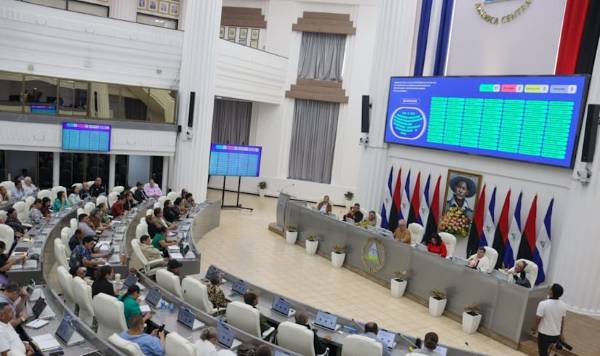
On June 18, 2026, Nicaragua's National Assembly (the country's unicameral parliament) approved a reform to Law No. 981, the law that created the Nicaraguan Import and Export Company, known by its Spanish acronym ENIMEX. The measure was approved with 91 votes and will take effect once published in La Gaceta, Nicaragua's official government gazette.
ENIMEX is a state-owned commercial enterprise responsible for handling public-sector imports and exports. According to the reform's explanatory statement, submitted to parliament by the country's co-presidents, the changes are intended to strengthen the government's capacity to participate in foreign trade, promote national exports, and facilitate the import of goods considered strategic for economic development. Lawmaker Wifredo Navarro, who read the explanatory statement during the legislative session, said the reform responds to an ongoing administrative reorganization of the state and is based on principles of institutional efficiency and more rational use of public spending.
Under the reform, ENIMEX will continue operating as a public company with its own legal personality, functional and financial autonomy, and indefinite duration, serving as the direct successor to the former Nicaraguan Import Company (ENIMPORT). Oversight of the company shifts to the Ministry of Development, Industry and Trade (known by its Spanish acronym MIFIC), replacing the previous arrangement under the Ministry of Finance and Public Credit.
The reform also changes the composition of ENIMEX's board of directors. Under the 2018 law, the board consisted of five members appointed by the president in consultation with private-sector representatives, including agricultural, cooperative, and small-business associations. Under the new structure, the board is reduced to three members: the Presidential Advisor for Investment, Trade and International Cooperation (or a designated representative), who presides over the board; the president of the Central Bank of Nicaragua; and the head of MIFIC. The reform also extends the required frequency of board meetings from every two months to every three months, and repeals two articles of the original law that had set specific eligibility requirements and conflict-of-interest restrictions for board members.
For readers unfamiliar with Nicaragua's political structure: the country has been governed since 2007 by President Daniel Ortega, with his wife, Rosario Murillo, serving as co-president since 2025. Legislative initiatives originating from the executive branch are generally approved by the National Assembly without significant modification, reflecting the ruling party's majority in that body.
Guy José Bendaña-Guerrero & Asociados

GUY JOSE BENDAÑA GUERRERO & ASOCIADOS has a long and prosperous tradition in the field of intellectual property (IP) in Nicaragua, with roots that go back to more than 100 years, resulting on long-term relationships with renowned clients and attorneys worldwide.
The firm has its origins in the law firm Henry Caldera & Henry Caldera-Pallais, founded in 1907 by Mr. Henry Caldera. That same year of 1907, through the efforts of Mr. Caldera, Nicaragua had its first Trademark Law. In the late 1930’s, Mr. Caldera’s oldest son, Dr. Henry Caldera-Pallais, after studying law in Nicaragua, attended the University of Michigan, where he graduated as a Registered U.S. Patent Attorney. Dr. Caldera-Pallais in 1964 was a founding member of the Interamerican Association of Intellectual Property (ASIPI), the first regional intellectual property organization in the Americas. The firm continued to grow during the administration of Dr. Franklin Caldera, son of Dr. Caldera-Pallais, who obtained his doctoral degree in law from the Universidad Centroamericana in 1973.
Since 1985 the current partners, Dr. Guy José Bendaña Guerrero and Mrs. Blanca Aragón de Bendaña, took over the management of the firm. Dr. Bendaña Guerrero, Director of the firm, has distinguished himself as one of the most respected authorities in Central America in the field of intellectual property and law in general, being the author of several books such as “Course of Industrial Property Law”, “Study of the new Laws of Industrial Property” and “New Study of Contracts “, among others. Mrs. Aragón de Bendaña has served as the firm’s general manager and, thanks to her excellent management, the firm has been in constant growth, with a highly qualified staff committed to excellence. Since 1996, partner Julián José Bendaña Aragón joined the firm, and has been standing out as one of the most recognized attorneys in the field of intellectual property.
We have adapted to the constant change of the business world, supporting our clients in finding the most appropriate legal solutions for each moment. The firm distinguishes itself by understanding the needs of its clients, offering personalized service and adding value to its activities.
Nowadays we continue to be the leading firm in Nicaragua in the area of intellectual property, and at the same time, we have been consolidating other areas of service within the civil, commercial and labor fields, as well as litigation and consulting in general. The firm is well positioned to guarantee a pragmatic service that meets the requirements of the most demanding clients.
