


 Ingresar


Panama Launches Nationwide Port Inventory Amid Major Port Reforms
By De Puy & Asociados
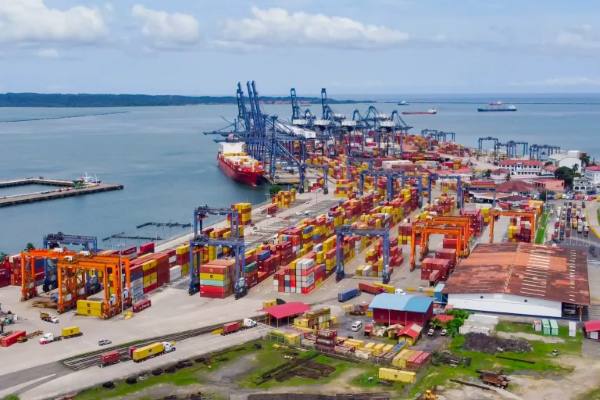
Panama is preparing a comprehensive national inventory of its port facilities, a move announced by government authorities in Panama City as the country faces a period of intense change in how its ports are governed, operated and positioned within global trade. The initiative comes in the midst of diplomatic tensions over foreign investment, recent judicial rulings affecting key terminal contracts, and efforts to ensure continuity of operations at ports critical to world commerce.
According to a recent report by La Estrella de Panamá, Panama’s Government recently began cataloging and valuing assets at its major port terminals, including equipment and infrastructure, as part of a transition process following a Supreme Court decision that invalidated a decades-old concession contract with a private operator. Government officials say the inventory is intended to lay the groundwork for fair compensation claims, legal clarity and the future tendering of port operations to new partners.
Panama's Panama Maritime Authority (Autoridad Marítima de Panamá, AMP) — the state body responsible for maritime services, safety, and regulation — is leading the effort, which includes detailed documentation of cranes, vehicles, terminals and software systems used in port operations. AMP’s official mission, as stated on its website, is to provide high-quality maritime and port services within a transparent and competitive framework, reinforcing the sector’s role in national economic growth.
The inventory process has been framed by Panama's political leadership as necessary to protect port operations and commercial flows while legal and contractual issues are resolved. The measure reflects a broader push by government authorities to reinforce regulatory oversight over maritime infrastructure and reassure international partners that the country’s logistics backbone remains stable.
Strategic Importance of Panama's Ports
Panama’s ports are globally significant due to their direct connection with the Panama Canal, an essential maritime passage that links the Atlantic and Pacific Oceans and carries approximately 3%–6% of global seaborne trade. Major terminals like Balboa on the Pacific side and Cristóbal and Manzanillo on the Atlantic are among the busiest container hubs in Latin America, handling millions of twenty-foot equivalent units (TEUs) annually. The country also hosts other important facilities such as the Colón Free Trade Zone, one of the largest free trade areas in the Americas.
Beyond their economic role, Panama’s ports have become a focal point in global geopolitical competition, especially involving the United States and China. Much of this attention centers on the previous long-term concession to manage major terminals given to Panama Ports Company (PPC), a subsidiary of Hong Kong-based CK Hutchison Holdings, which had operated Balboa and Cristóbal for decades.
In early 2026, Panama's Supreme Court ruled the concession contract with PPC unconstitutional, triggering a government takeover of the two terminals and the appointment of interim operators while the legal and valuation processes proceed. Panama’s leadership has described the action as a “decree of occupation” designed to maintain continuity of service and allow time for new concession procedures to be organized.
The court's decision sparked diplomatic reactions. Beijing's Foreign Ministry publicly stated its intention to defend the rights of Chinese-linked companies, which has added tension to Panama's relations with China and reflects broader strategic sensitivities around port control near the canal.
Panama's President José Raúl Mulino has emphasized that the transition is intended to protect national interests and ensure operational stability, asserting that commercial flows have not been disrupted while the inventory and valuation are underway.
Once the national inventory is completed, authorities will use it to help determine the value of assets and settle potential compensation claims with former operators. Official statements indicate that technical assessments and valuation reports are expected within the next 90 days following the designation of independent experts.
De Puy & Asociados

De Puy & Asociados is a boutique law firm proud to deliver personalized, efficient service provided by top-tier attorneys to each of our valued clients.
Based in the Republic of Panama, our experienced legal team specializes in intellectual property and offshore corporate matters in both Panama and Belize. Over the years, De Puy & Asociados has achieved remarkable growth in the Criminal Misuse practice area, securing favorable and high-profile outcomes for our clients.
We also offer in-depth expertise in immigration and real estate transactions, providing comprehensive legal support to investors and families seeking to establish a presence in Panama.
