


Panama Recognizes University Research Projects Addressing Health, Environmental and Technological Challenges
By De Puy & Asociados
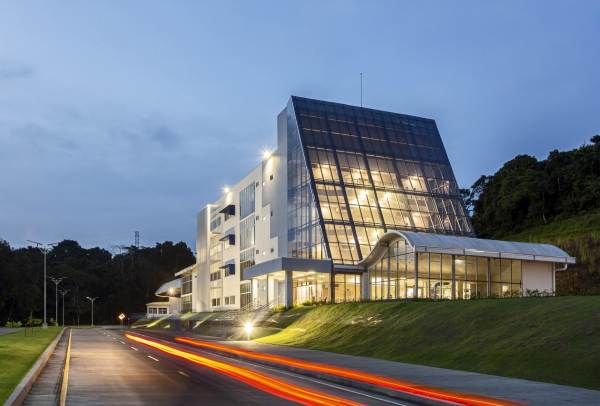
Panama has recognized a new generation of young researchers through the 2026 Scientific Initiation Conference (JIC), which awarded university projects proposing solutions to challenges in health, environmental protection, technology and social development.
The initiative, conceived by the Technological University of Panama (UTP) and supported by the National Secretariat of Science, Technology and Innovation (Senacyt), brought together 113 research projects developed by 279 undergraduate students from eight universities, with guidance from 99 academic advisers.
The projects were presented during the 2026 International Congress of Engineering, Science and Technology (IESTEC) and competed in four categories: Engineering, Health Sciences, Natural and Exact Sciences, and Social and Humanistic Sciences.
Research with practical applications
Among the projects recognized in Health Sciences, first place went to a study analyzing the biochemical and molecular characteristics of Klebsiella spp. and Serratia spp. bacteria found in fresh lettuce sold in Panama City. The research was conducted by students from the University of Panama.
In Natural and Exact Sciences, the top award recognized research into bioactive compounds extracted from Bougainvillea species and their potential application in polylactic acid biofilms, a field with potential applications in the development of new biomaterials.
The Social and Humanistic Sciences category recognized an intelligent task management and educational assistance system based on machine learning, developed by students from the Technological University of Panama.
In Engineering, the winning project involved the design and evaluation of biochar filters made from coconut shells (Cocos nucifera), incorporating cyber-physical systems, monitoring and automated image analysis. The technology is intended to support water filtration solutions for rural communities.
Technology and innovation across multiple fields
Other awarded projects included a neural-network-based system to support diabetic retinopathy screening, research into rice genotype performance under different environmental conditions, and a digital-twin-based solid waste management system powered by autonomous solar energy.
The competition also recognized research into early Parkinson's disease detection through gait analysis, hyperspectral imaging techniques to identify coffee adulterants, and the early detection of electrical anomalies in residential installations.
The awards included B/.6,000 for first place, B/.3,000 for second place and B/.2,000 for third place in each of the four categories. Five additional projects received honorable mentions.
Promoting scientific research among young people
First held in 2015, the JIC was initially conceived by the Technological University of Panama and expanded nationally in 2016 to include universities accredited by Panama's National Council for University Evaluation and Accreditation (CONEAUPA).
The initiative aims to integrate research into university education, identify scientific talent at an early stage and encourage projects that address challenges in the country's social and economic environment.
By connecting university research with practical problems, the program contributes to the development of scientific capabilities and technological innovation in Panama, while creating opportunities for future research, entrepreneurship and the potential development of intellectual property.
De Puy & Asociados

De Puy & Asociados is a boutique law firm proud to deliver personalized, efficient service provided by top-tier attorneys to each of our valued clients.
Based in the Republic of Panama, our experienced legal team specializes in intellectual property and offshore corporate matters in both Panama and Belize. Over the years, De Puy & Asociados has achieved remarkable growth in the Criminal Misuse practice area, securing favorable and high-profile outcomes for our clients.
We also offer in-depth expertise in immigration and real estate transactions, providing comprehensive legal support to investors and families seeking to establish a presence in Panama.
