


 Ingresar
 Compartir:


Paraguay aims to protect its sweet herb as an appellation of origin
By BKM | Berkemeyer
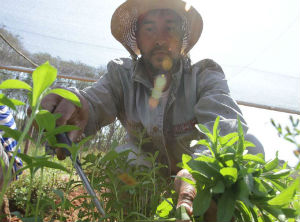
"The denomination of origin that Dinapi will grant is like giving a birth certificate to a product. It shows that the ka'a he'ê is Paraguayan and it is the first step for the international community to accept it”, Juan Barboza, president of Capaste, said to ABC Color.
Commonly known as candyleaf, sweetleaf or sugarleaf in different parts of the world, the stevia rebaudiana is called ka'a he'ê (sweet herb) by the Guaraní people of Paraguay. It is a tender perennial native to parts of Paraguay and Brazil that has been used for more than 1500 years by the Guaraní people.
San Pedro, Caaguazú, Itapúa and Alto Paraná are the Paraguayan departments which produce the greatest yield of the product, positioning Paraguay as the world's second-largest producer of stevia after China, with the European Union as its biggest market. With that in mind local ka'a he'ê producers have been long fighting for a better International protection of the product.
An appellation of origin is a special kind of geographical indication generally consisting of a geographical name or a traditional designation used on products which have a specific quality or characteristics that are essentially due to the geographical environment in which they are produced. Consumers are familiar with these products and often request them – even unknowingly – using their geographical name.
BKM | Berkemeyer

Established in 1951, BKM | Berkemeyer provides expert legal services to local and foreign clients in Paraguay, gaining a global reputation for quality, expertise and professionalism.
BKM | Berkemeyer prides itself on the ability to meet clients’ needs directly, providing professional and practical advice of the highest quality through team-work and collaboration to render services in a thorough manner.
Lawyers in the firm are multilingual, speaking Spanish, English, German, French, Portuguese, Italian and Japanese, which facilitates efficient and expeditious communication.
