


Paraguay and Real Estate Investment: Looking Beyond the Property
By María Julia Méndez, Leyla Apud and Carla Sosa, BKM | BERKEMEYER
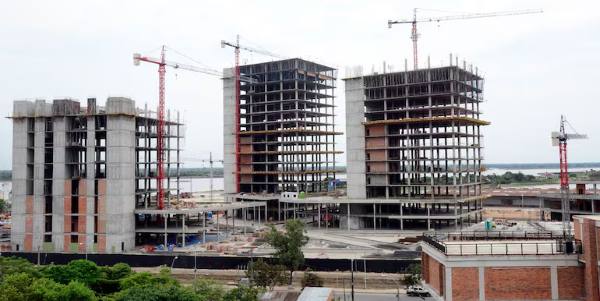
What do investors really consider when deciding where to allocate their capital?
Returns matter, but so does how much of that return they will retain after taxes, the structure they will use, the level of security their investment will enjoy, and the alternatives available to them if they decide to remain in the country.
Paraguay is often presented to regional investors in terms of one well-known advantage: its tax competitiveness. However, reducing its appeal to a tax rate would tell only part of the story.
The opportunity becomes apparent when the entire investment lifecycle is considered.
From Capital to Returns
A real estate investment begins long before a project generates income. First, it is necessary to determine how the capital will enter the project: as an equity contribution, through the contribution of assets, or by means of financing. Those resources are then converted into land, construction, materials, services, and other development costs.
Once the project begins generating revenue, the question changes: how is its financial result determined, and how is it taxed? Finally, a question that is often considered too late arises: how does the investor realize a return and exit the investment?
CAPITAL IN → INVESTMENT → REVENUE GENERATION → RETURN / EXIT
This sequence helps explain why two economically similar investments can ultimately produce different results.
The Property May Be the Same. The Structure Changes the Outcome.
Acquiring a property directly as an individual is not equivalent to purchasing it through a company. Nor is structuring an investment for wealth preservation the same as structuring a business designed to develop and sell properties, bring in new investors, and reinvest in successive projects.
The choice of structure can affect the investor’s liability, taxation, project management, and exit strategy.
Even at the exit stage, different alternatives are available: the property itself can be sold, the shares or ownership interests in the company that owns it can be transferred, or the structure can be liquidated. In each case, the asset or interest being transferred from a legal standpoint is different, which in turn affects the tax analysis.
The structure with the lowest tax cost is not necessarily the most appropriate structure for the investment.
Incentives: An Impact That Goes Beyond the Direct Beneficiary
In the real estate sector, one point needs to be clarified: there is no general tax benefit simply for investing in property.
However, this does not mean that investment promotion regimes are unrelated to real estate.
Productive projects established in Paraguay need land, industrial facilities, and warehouses. Companies need offices. Logistics operations require distribution centers. Entrepreneurs, executives, and investors relocating to the country need housing and services.
The impact of incentives can therefore be indirect, yet equally significant.
Real estate does not need to be the direct beneficiary of an incentive to benefit from the investment that incentive attracts.
When Capital Is Accompanied by the Investor
For some investors, Paraguay is not merely a destination for allocating capital, but also a country from which to conduct business, manage investments, and establish a more permanent presence.
In this context, the Investor Pass introduces a tool specifically designed to link investment attraction with the relocation of those making the investments, facilitating access to permanent residency in Paraguay for investors who meet the requirements established under the applicable regime.
Its significance lies precisely in this connection. Investment attraction policy looks beyond capital alone to include the investors themselves, offering a dedicated pathway for those seeking to establish closer ties with the country.
For the real estate sector, this tool also has a particular dimension: property investment may be among the investment modalities covered by the regime, provided the applicable requirements and conditions are met.
In this way, Paraguay adds another instrument to its regional offering: not only attracting investment, but also creating conditions that give investors reasons to settle in the country, develop new business activities, and maintain a long-term economic relationship with it.
Legal Certainty Is Also a Form of Return
An attractive return loses value if the legal risk an investor must assume is excessive or difficult to assess.
In a real estate investment, legal certainty translates into very specific questions: Who is the actual owner of the property? Are there any liens or restrictions? Does the project have the necessary permits? Do the contracts adequately protect the parties? Do the applicable rules allow the consequences of the investment to be reasonably anticipated?
Due diligence and appropriate structuring help identify and manage these risks.
Legal certainty does not mean the absence of risk. It means being able to identify and measure that risk and having the tools to protect the investment.
Real Estate as an Investment and as Infrastructure
For the real estate sector, attracting capital and new investors presents a dual opportunity.
On the one hand, property can be the direct destination of an investment when an investor seeks to acquire, develop, or operate real estate assets in Paraguay.
But real estate also serves another purpose: it can provide the infrastructure required for other investments to develop. Industrial businesses need land and facilities; logistics operations need warehouses and distribution centers; companies need offices; and those choosing to establish themselves in Paraguay need housing and services.
From this perspective, growth in the real estate sector depends not only on capital seeking to invest directly in property. It can also accompany the arrival and expansion of other economic activities, businesses, and investors that generate new demand for real estate.
Real estate can be the destination of capital, but it can also be the infrastructure that enables other capital to enter Paraguay and grow.
Ultimately, attracting investment does not simply mean bringing capital into the country. The challenge is to create the conditions for that capital to find opportunities to remain, be reinvested, and grow.
For further information, please contact:
María Julia Méndez — julia.mendez@berke.com.py
Leyla Apud — leyla.apud@berke.com.py
Carla Sosa — carla.sosa@berke.com.py
BKM | Berkemeyer

Established in 1951, BKM | Berkemeyer provides expert legal services to local and foreign clients in Paraguay, gaining a global reputation for quality, expertise and professionalism.
BKM | Berkemeyer prides itself on the ability to meet clients’ needs directly, providing professional and practical advice of the highest quality through team-work and collaboration to render services in a thorough manner.
Lawyers in the firm are multilingual, speaking Spanish, English, German, French, Portuguese, Italian and Japanese, which facilitates efficient and expeditious communication.
