


Patents support higher productivity and better paid jobs in Latin America and the Caribbean
By Edy Portal, Eproint
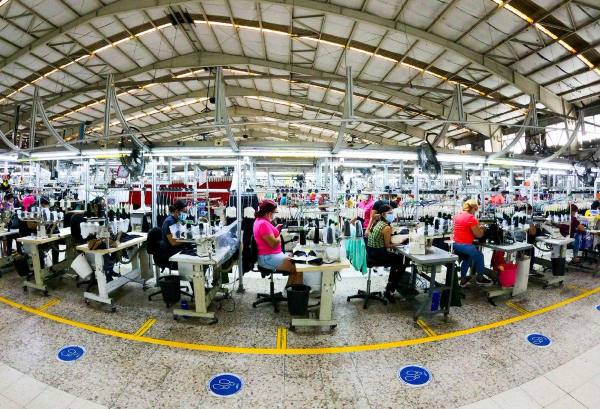
The use of patents and trademarks is associated with higher productivity and better wages across Latin America and the Caribbean, but the region continues to face significant challenges in turning its innovation capabilities into locally owned intellectual property assets.
That is one of the main findings of a joint study by the European Patent Office (EPO) and the Economic Commission for Latin America and the Caribbean (ECLAC), which examines the relationship between intellectual property, industrial activity and economic performance in nine countries: El Salvador, Argentina, Brazil, Chile, Colombia, Ecuador, Mexico, Peru and Uruguay.
According to the study, manufacturing industries with intensive use of intellectual property rights, particularly patents and trademarks, account for 13.6% of regional GDP and approximately 1.6 million jobs. These industries also show significantly higher productivity levels and pay average wages around 30% higher than other sectors. In industries particularly intensive in patents, the productivity advantage reaches 16%, while the wage premium exceeds 50%.
At the same time, the study highlights a structural paradox: despite having significant scientific and technological capabilities, Latin America and the Caribbean remains highly dependent on technologies developed and patented outside the region. More than 85% of patent applications filed in the countries covered by the study originate abroad, while domestic applicants account for only 13.5%. Brazil and Mexico account for a substantial share of regional domestic patenting activity.
The same imbalance can be seen in trade. Products from manufacturing industries that make intensive use of intellectual property rights account for approximately 9% of the region's exports, but 19% of its imports. Patent-intensive products alone represent around 15% of imports, underscoring the region's dependence on foreign-owned technology.
The report nevertheless points to significant untapped domestic innovation capacity. Universities and public research organizations accounted for 29% of patent applications originating in the region between 2016 and 2020. Almost half of this activity was concentrated in manufacturing sectors with high patent intensity, highlighting the potential role of public research institutions as a source of technology for industry.
Another challenge is the gap between where inventions are developed and where the resulting intellectual property is ultimately owned. In 2020, Latin America's share of inventions developed worldwide was almost 80% higher than its share of patents owned by applicants from the region. The discrepancy is particularly pronounced in fields such as computer technology, where inventions originating in Latin America are frequently owned by companies based outside the region, particularly in the United States and Europe.
For the EPO and ECLAC, closing this gap requires more than simply increasing the number of patent applications. Stronger technology-transfer mechanisms, closer cooperation between universities and businesses, greater commercialization of research results and deeper regional cooperation will be essential if innovation is to translate into greater value creation within Latin America.
The EPO–ECLAC study Harnessing Intellectual Property for Development: Opportunities and Challenges for Latin America and the Caribbean includes El Salvador among the nine countries examined in detail.
In El Salvador, the report identifies a relatively small share of manufacturing employment and value added associated with intellectual-property-intensive industries. According to the report's country-level figures for 2016–2020, approximately 19% of manufacturing employment is concentrated in industries classified as patent- and/or trade-mark-intensive, while approximately 21% of manufacturing value added comes from these industries.
The report also places El Salvador among the smaller economies in the region with a highly restricted international co-inventorship footprint. It states that smaller economies tend to have limited collaborative networks.
Eproint

Whether your company is big or small, at Eproint you are our priority and we can take care of everything regarding legal processes to create and protect your brands, and provide you with an Intellectual Property strategy to achieve your goals.
In El Salvador, Practice Head Edy Guadalupe Portal is a partner at Eproint and has more than 25 years of experience in Intellectual Property. Since 1995, she has been recognized as the Salvadoran voice of Intellectual Property protection for always informing the IP community about changes to IP law and international treaties.
During her career, Mrs. Portal has helped numerous international law firms and in-house counsel with all facets of their IP matters in El Salvador and Central America. Her extensive practice includes work in trademarks, patents, industrial designs, utility models, copyrights, unfair competition, foreign investment, regulatory law/health registrations, licensing, franchising, appellations of origin, geographical indications, IP litigation, fashion law, new technologies, data privacy, cybersecurity, domain names, entertainment law, advertisement law, trade secrets, valuation of intangibles, and IP due diligence. She is also recognized for the great anti-piracy and anti-counterfeiting results she has delivered for her clients. She also helps coordinate Latin America Intellectual Property Protection for the firm.
