


 Ingresar


Positive and Negative Aspects of Nicaragua in CAFTA-DR
By Guy José Bendaña-Guerrero & Asociados
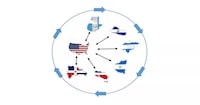
The Inter-American Dialogue, a non-profit organization that promotes democratic governance, prosperity, and social equity in Latin America and the Caribbean, has recently made a report on Nicaragua and CAFTA.
The report finds that Nicaragua has violated several provisions of the Central America Free Trade Agreement (CAFTA-DR), including those related to labor rights, environmental protection, and government procurement. The report also finds that the Nicaraguan government has failed to adequately enforce the CAFTA-DR's dispute settlement mechanisms.
Although some of its negative conclusions, the report does acknowledge positive aspects of Nicaragua's participation in CAFTA-DR. For example, it notes that Nicaragua's exports to the United States have increased significantly since the agreement was implemented in 2006, by more than 50%. Exports have also diversified, as before the agreement Nicaragua's exports were heavily dependent on a few commodities, such as coffee and sugar.
The report also notes that Nicaragua has made some progress in improving its labor rights record. For example, the government has ratified the International Labour Organization's Freedom of Association and Protection of the Right to Organize Convention.
Lastly, the agreement has helped to open up the Nicaraguan market to foreign investment, and this has led to an increase in investment in the country. As a consequence, Nicaragua has become more integrated into the global economy.
Guy José Bendaña-Guerrero & Asociados

GUY JOSE BENDAÑA GUERRERO & ASOCIADOS has a long and prosperous tradition in the field of intellectual property (IP) in Nicaragua, with roots that go back to more than 100 years, resulting on long-term relationships with renowned clients and attorneys worldwide.
The firm has its origins in the law firm Henry Caldera & Henry Caldera-Pallais, founded in 1907 by Mr. Henry Caldera. That same year of 1907, through the efforts of Mr. Caldera, Nicaragua had its first Trademark Law. In the late 1930’s, Mr. Caldera’s oldest son, Dr. Henry Caldera-Pallais, after studying law in Nicaragua, attended the University of Michigan, where he graduated as a Registered U.S. Patent Attorney. Dr. Caldera-Pallais in 1964 was a founding member of the Interamerican Association of Intellectual Property (ASIPI), the first regional intellectual property organization in the Americas. The firm continued to grow during the administration of Dr. Franklin Caldera, son of Dr. Caldera-Pallais, who obtained his doctoral degree in law from the Universidad Centroamericana in 1973.
Since 1985 the current partners, Dr. Guy José Bendaña Guerrero and Mrs. Blanca Aragón de Bendaña, took over the management of the firm. Dr. Bendaña Guerrero, Director of the firm, has distinguished himself as one of the most respected authorities in Central America in the field of intellectual property and law in general, being the author of several books such as “Course of Industrial Property Law”, “Study of the new Laws of Industrial Property” and “New Study of Contracts “, among others. Mrs. Aragón de Bendaña has served as the firm’s general manager and, thanks to her excellent management, the firm has been in constant growth, with a highly qualified staff committed to excellence. Since 1996, partner Julián José Bendaña Aragón joined the firm, and has been standing out as one of the most recognized attorneys in the field of intellectual property.
We have adapted to the constant change of the business world, supporting our clients in finding the most appropriate legal solutions for each moment. The firm distinguishes itself by understanding the needs of its clients, offering personalized service and adding value to its activities.
Nowadays we continue to be the leading firm in Nicaragua in the area of intellectual property, and at the same time, we have been consolidating other areas of service within the civil, commercial and labor fields, as well as litigation and consulting in general. The firm is well positioned to guarantee a pragmatic service that meets the requirements of the most demanding clients.
