


 Ingresar


Smart Barrier to Safeguard Freshwater & Boost Panama Canal Efficiency
By De Puy & Asociados
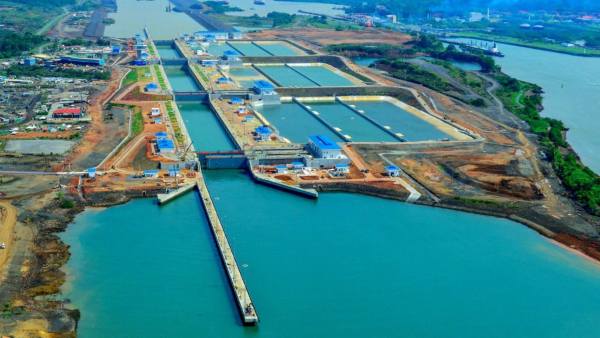
A team of engineers at Purdue University is working on a new solution to address one of the longstanding challenges facing the Panama Canal: the gradual intrusion of saltwater into the freshwater system that powers the locks. The innovation—called a reconfigurable, navigable waterway barrier (RNWB)—aims to improve the canal’s water efficiency and protect the Gatún Lake reservoir, which is essential for its operation.
The project, led by Professor Pablo Zavattieri from Purdue’s Lyles School of Civil Engineering, is supported by the Trask Innovation Fund, part of the university’s Purdue Innovates Incubator. The team received USD 100,000 to help build a working prototype and test the system under controlled conditions.
According to the researchers, the RNWB is designed to limit the movement of saltwater into freshwater zones, especially when large vessels move through the locks. Unlike traditional barriers, this system is intended to be reconfigurable and allow ships to pass through, maintaining the flow of traffic without major disruptions.
Saltwater intrusion has become a growing concern for the Panama Canal Authority, particularly in the face of climate change, prolonged dry seasons, and increased shipping volume. The canal relies heavily on the availability of freshwater from Gatún Lake, not just for ship transits but also for local consumption.
The team at Purdue has been in early-stage conversations with representatives from the Panama Canal Authority to explore how this type of solution could be adapted to the canal’s infrastructure. The long-term goal is to determine whether this technology could be integrated into existing systems to help manage water use more effectively.
If successful, the innovation could provide an additional tool for water conservation and operational planning. However, the project remains in the research phase, and its future application will depend on technical validation, cost assessments, and collaboration with stakeholders in Panama
De Puy & Asociados

De Puy & Asociados is a boutique law firm proud to deliver personalized, efficient service provided by top-tier attorneys to each of our valued clients.
Based in the Republic of Panama, our experienced legal team specializes in intellectual property and offshore corporate matters in both Panama and Belize. Over the years, De Puy & Asociados has achieved remarkable growth in the Criminal Misuse practice area, securing favorable and high-profile outcomes for our clients.
We also offer in-depth expertise in immigration and real estate transactions, providing comprehensive legal support to investors and families seeking to establish a presence in Panama.
