


Compartir:


Trademarks
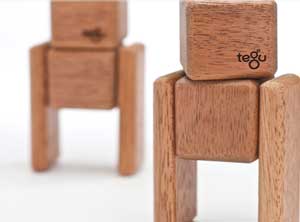 Tegu is an Honduran company that produces magnetic wooden blocks and toys since 2009, increasingly transforming itself into a well-known brand that represents the country.
It all begun in 2004, when American Christopher Haughey arrived to Honduras as a consultant on a project for street children. A couple of years later he decided to “create a for-profit business that would have a social effect on the lives of Hondurans”.
Using his knowledge in carpentry and mechanical engineering, Haughey´s established in 2009 a company that transformed wood into high quality toys: “Wooden broadleaved blocks with powerful magnets to connect them, creating a unique toy that no one had developed in the world”.
The toy was patented, trademarked and commercialized with the name Tegu, derived from Tegucigalpa, capital city of Honduras, where the toys are manufactured by 90 Hondurans with local raw materials. The headquarters are located in Connecticut, United States, center of the design and distribution platforms.
Since its foundation Tegu has produced 200.000 thousand units with prices from 20 to 150 dollars. United States is the main consumer with 80% of the market, followed by Asia (South Korea and Singapore) and Europe (England, France, Germany, Netherlands, Switzerland and the Scandinavian countries). Only 1% to 2% of the products are placed in Honduras.
Tegu also encourages reforestation programs and operates with farmers co-ops that commercialize wood under environmental sustainability certifications. “We want Tegu to be a recognized global trademark that allows children from any country to learn about Honduras and Tegucigalpa”, Haughey concludes.
Tegu, national example
By Bufete Mejía
It all begun in 2004, when American Christopher Haughey arrived to Honduras as a consultant on a project for street children. A couple of years later he decided to “create a for-profit business that would have a social effect on the lives of Hondurans”.
Using his knowledge in carpentry and mechanical engineering, Haughey´s established in 2009 a company that transformed wood into high quality toys: “Wooden broadleaved blocks with powerful magnets to connect them, creating a unique toy that no one had developed in the world”.
The toy was patented, trademarked and commercialized with the name Tegu, derived from Tegucigalpa, capital city of Honduras, where the toys are manufactured by 90 Hondurans with local raw materials. The headquarters are located in Connecticut, United States, center of the design and distribution platforms.
Since its foundation Tegu has produced 200.000 thousand units with prices from 20 to 150 dollars. United States is the main consumer with 80% of the market, followed by Asia (South Korea and Singapore) and Europe (England, France, Germany, Netherlands, Switzerland and the Scandinavian countries). Only 1% to 2% of the products are placed in Honduras.
Tegu also encourages reforestation programs and operates with farmers co-ops that commercialize wood under environmental sustainability certifications. “We want Tegu to be a recognized global trademark that allows children from any country to learn about Honduras and Tegucigalpa”, Haughey concludes.
Bufete Mejía & Asociados

We are a leading firm in Honduras capable of giving an agile and effective service. Our offices are in San Pedro Sula and Teguacigalpa, and we have associates and correspondents around the world.
We are a specialized firm, that gives integral services in Intellectual Property, such as presentations, support, defense and maintenance of patents, trademarks, copyright, design and geographical indications.
Our Firm has been identified as the best IP firm in Honduras by the prestigious publication Latin Lawyer for the last five years.
