


 Ingresar


The Economist evaluates Peru
By Francisco Espinosa Bellido
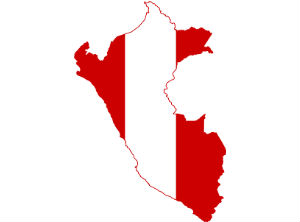
The report "Intellectual Property in Peru and its impact on the country´s growth and development" assures that thanks to a series of trade agreements Peru´s IP protection has improved through national legal framework.
Among those agreements are the Patent Cooperation Treaty (PCT), which provides a unified procedure for applications to protect inventions, and the Trademark Law Treaty, which standardizes and streamlines national and regional trademark registration procedures.
Nevertheless, according to the report IP rights application are still deficient in Peru and the government must yet work to fully implement its agreements. Those are the main reasons that keep the country on the “Watch List” of the Office of the United States Trade Representative (USTR), which annually reports on the adequacy and effectiveness of U.S. trading partners’ protection and enforcement of intellectual property rights.
The Economist report also demands Peru to continue reducing government´s use of unlicensed software, an implementation that has been delayed several times and is stipulated on the United States-Peru Trade Promotion Agreement, which incorporates intellectual property policies, among others.
It also notes that judges and prosecutors face different complications to issue sentences on offenders and conduct raids where violations occurs, and that according to international benchmarks Peru is below its regional peers in terms of innovation, patent applications and Research & Development investment (R&D).
For last, the research utters that the national trademark and patent office (National Institute for the Defense of Competition and Protection of Intellectual Property, Indecopi) lacks resources to increase ex officio investigations and users are unhappy with the system, as they suffer delays with patent application procedures.
Created in 1946, The Economist Intelligence Unit provides forecasting and advisory services to businesses, financial firms and governments.
Espinosa Bellido Abogados

The Industrial Property work of Estudio Francisco Espinosa Bellido Abogados started in 1941 with Dr. Francisco Espinosa Sánchez, father of current senior partner Dr. Francisco Espinosa Bellido and grandfather of current partner Dr. Francisco Espinosa Reboa.
In its 69 years of outstanding legal work the firm has represented the interests of several national and international clients, companies and foreign correspondents obtaining and defending their industrial property rights in Peru, while also displaying an active and remarkable participation in the direction of professional associations in our speciality.
We specialize in counselling, prosecution and litigation in trademarks, patents, trade names, slogans, industrial designs, copyright, domain names, enforcement of those rights as well as unfair competition.
