


 Ingresar


The IP Mistakes That Cost Puerto Rico Businesses the Most
By Ferraiuoli LLC
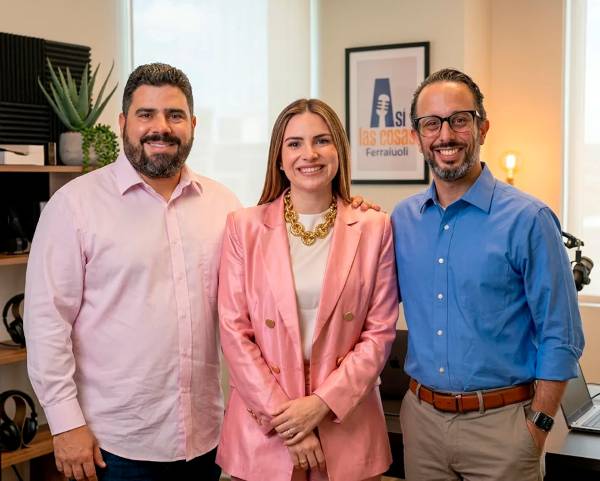
Editorial note: This article is based on an episode of Ferraiuoli’s Así Las Cosas podcast series, hosted by Maristella Collazo-Soto, Capital Member and Co-Chair of the firm’s Intellectual Property Practice Group. The episode explores common misconceptions about intellectual property encountered in legal practice, with Collazo-Soto joined by Víctor M. Rodríguez Reyes, a registered patent attorney and chemist, and Jean G. Vidal-Font, Capital Member and litigator focusing on AI and cybersecurity.
Some of the most consequential intellectual property problems faced by businesses do not necessarily begin with a sophisticated legal dispute. They can start with an assumption that appears straightforward: that registering a company name protects the brand, that material available through Google can be reused, or that an invention can be disclosed publicly before a patent application is filed. Attorneys at Puerto Rico law firm Ferraiuoli say these and other misconceptions regularly surface in their practices.
The distinction between corporate registration and trademark protection is one of the issues highlighted by Jean G. Vidal-Font. Registering a corporation or limited liability company with Puerto Rico’s Department of State does not establish trademark rights in the same name. The two systems serve different purposes, meaning that a business can complete its corporate registration and still face obstacles when attempting to use or register the corresponding brand.
The problem can become more costly when companies wait until after developing their branding to conduct trademark clearance. According to Ferraiuoli, businesses sometimes design their logos, establish websites and social-media accounts and then seek trademark registration, only to discover that an earlier user may have rights in a conflicting mark. A search of the trademark registry alone may not reveal those rights. The attorneys distinguish between a registry search and a broader availability search that considers marks already being used in the marketplace, including unregistered marks.
Copyright raises another common misconception: that material found through an internet search is available for anyone to use. Vidal-Font notes that appearing in a Google search does not establish ownership or permission to reproduce a work. The same applies to the frequently repeated idea that using only a small portion of a work, such as a certain number of seconds of music, automatically qualifies as fair use. The attorneys emphasize that fair use is determined on a case-by-case basis rather than through a fixed percentage or time limit.
The discussion also addresses a less visible issue: businesses and individuals may already own intellectual property without recognizing it. Under U.S. copyright law, protection generally arises automatically when an original work is created and fixed in a tangible medium. A photograph taken with a phone, for example, can therefore be protected by copyright even though its creator has never formally registered it. Registration nevertheless has important procedural consequences, including a requirement to register a U.S. work before bringing an infringement action in federal court.
Patent protection presents a different timing problem. Víctor M. Rodríguez Reyes identifies public disclosure before filing as one of the most significant mistakes made by inventors. In the United States, an inventor generally has a one-year grace period following certain public disclosures to file a patent application. Many other jurisdictions follow an absolute-novelty approach under which public disclosure before filing can prevent patent protection altogether. A scientific publication, a product offered for sale, or a presentation to potential investors or business partners can therefore have consequences for international patent rights, particularly where confidentiality protections are absent.
The attorneys also discuss ownership of intellectual property within businesses and startups. A company can invest substantial amounts of money in developing a product or technology without having adequately established who owns the underlying intellectual property. Ferraiuoli describes situations involving founders, employees and previous employers in which ownership questions emerge only shortly before a product is launched or after significant investment has already taken place. The lawyers point to contractual arrangements, due diligence and clear treatment of pre-existing intellectual property as ways of addressing those risks before a dispute develops.
Artificial intelligence is adding another layer to these questions. According to Vidal-Font and Rodríguez Reyes, businesses are increasingly using AI tools in the creation of content, software and patent-related materials, but the technology does not eliminate the underlying questions of authorship, ownership, confidentiality or third-party rights. The attorneys also point to the possibility that confidential information or inventions may be disclosed to an AI platform when users enter sensitive material into a tool. The resulting work may raise additional questions about whether copyright or patent protection is available and whether the output incorporates material belonging to another party.
For businesses, the attorneys' broader message is that intellectual property management starts before a dispute arises. Ferraiuoli recommends establishing an internal IP policy capable of identifying the intellectual property created or acquired by a company, determining how it should be protected and educating employees about the associated risks. Such policies can be scaled according to the size and resources of the business rather than being limited to large corporations.
The discussion ultimately places intellectual property within a broader business-management framework. Trademarks, copyrights, patents, trade secrets and technology-related rights can arise at different stages of a company's activities, and the legal consequences of overlooking them can emerge only after a product, brand or investment is already established. For businesses operating in Puerto Rico and internationally, the distinction between what is created, what is owned, what is registered and what can legally be used can therefore be as important as the underlying commercial strategy.
Ferraiuoli LLC

Ferraiuoli LLC (FLLC) was founded in 2003 by the late Blas Ferraiuoli-Martínez, Eugenio Torres-Oyola and María Marchand-Sánchez. This group was then joined in 2004 by Fernando J. Rovira-Rullán, thus forming the founding core of FLLC. FLLC has grown exponentially since its founding from a law firm with three attorneys and a support staff of three to its current size of 54 attorneys with a support staff of 38. Also, FLLC has grown from initially being known as an intellectual property and corporate law boutique law firm to a multiservice law firm that handles most matters relevant to a business while continuing to earn praise for its leading intellectual property and corporate practices.
FLLC has been ranked as a leading law firm in Puerto Rico by the professional publication Chambers Latin America in intellectual property, corporate, bankruptcy, labor & employment, real estate, and tax law. Moreover, 17 FLLC partners have been ranked as leaders in their field by the same publication. 4 FLLC partners are ranked as leaders in Intellectual Property, no other firm has more than 2. This recognition in such a short period of time is a tribute to FLLC’s business model.
FLLC prides itself in doing its work faster and more cost-efficiently yet with the same quality as that of its main competitors. The founding name partners are available at all times to attend to client matters. Their work ethic sets the tone for the rest of the firm. FLLC’s founders’ goal has been steady from the outset: become one of the premier multiservice law firms in Puerto Rico.
