


The newest chapter in the Apple v. Samsung saga
By Cristina Arenas Solís, Ferraiuoli LLC
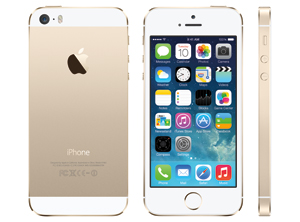
Very recently, on November 18th, 2013 the United States Court of Appeals for the Federal Circuit issued a ruling on the Northern District Court of California decision. The Federal Circuit affirmed the District Court’s ruling with respects to Apple’s design patent. Nevertheless, the Federal Circuit found the District Court erred in its ruling with regards to Apple’s utility patents.
The crux of the Federal Circuit’s decision is what constitutes sufficient causal nexus between the alleged irreparable harm and the infringement. The District Court determined that, even though Apple had shown that it suffered an irreparable harm, it did not show a strong causal nexus between the alleged harm and the patent infringement. The Federal Circuit held that the District Court’s causal nexus standard was too strict, as it required Apple to show that one of the patented features is the exclusive reason consumers purchased Samsung’s products. Instead, the Federal Circuit concluded that Apple must show some connection between the patented feature and demand for Samsung’s products. Thus, the Federal Circuit vacated the District Court’s ruling on the permanent injunction request for the utility patents and remanded it for further consideration.
Moreover, the Federal Circuit held that, when multiple patents are being asserted, it is not necessary to analyze irreparable harm based on each patent individually. Rather, irreparable harm may be analyzed in the aggregate, where it is logical and equitable to do so. Nevertheless, whether it should be done in this particular case, the Federal Circuit left it to the District Court.
Evidently, this most recent decision by the Federal Circuit represents a victory for Apple, but more than that, it appears to relax the causal nexus standard, thereby making the injunctive route for patent holders less burdensome.
Ferraiuoli LLC

Ferraiuoli LLC (FLLC) was founded in 2003 by the late Blas Ferraiuoli-Martínez, Eugenio Torres-Oyola and María Marchand-Sánchez. This group was then joined in 2004 by Fernando J. Rovira-Rullán, thus forming the founding core of FLLC. FLLC has grown exponentially since its founding from a law firm with three attorneys and a support staff of three to its current size of 54 attorneys with a support staff of 38. Also, FLLC has grown from initially being known as an intellectual property and corporate law boutique law firm to a multiservice law firm that handles most matters relevant to a business while continuing to earn praise for its leading intellectual property and corporate practices.
FLLC has been ranked as a leading law firm in Puerto Rico by the professional publication Chambers Latin America in intellectual property, corporate, bankruptcy, labor & employment, real estate, and tax law. Moreover, 17 FLLC partners have been ranked as leaders in their field by the same publication. 4 FLLC partners are ranked as leaders in Intellectual Property, no other firm has more than 2. This recognition in such a short period of time is a tribute to FLLC’s business model.
FLLC prides itself in doing its work faster and more cost-efficiently yet with the same quality as that of its main competitors. The founding name partners are available at all times to attend to client matters. Their work ethic sets the tone for the rest of the firm. FLLC’s founders’ goal has been steady from the outset: become one of the premier multiservice law firms in Puerto Rico.
