


 Ingresar


The PEDRO PISCAL Case in Chile
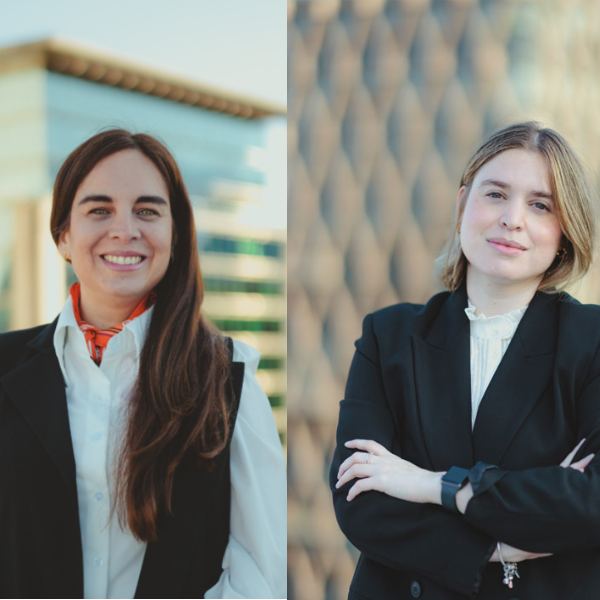
By Sofía Covarrubias & Fernanda Chamorro
At the intersection of creativity and industrial property law, Chile is facing a case that is drawing attention: the registration of the trademark PEDRO PISCAL with the National Institute of Industrial Property (INAPI) and the registration of the domain names "pedropiscal.cl" and "pedropiscalpisco.cl" with NIC Chile. What may have seemed like a witty remark or a pun quickly turned into a far-reaching legal debate involving the identity of Pedro Pascal, one of the most globally recognized Chilean actors.
The case raises a set of questions: Are there enough similarities between the name Pedro Pascal and the trademark Pedro Piscal? And how far can freedom in the registration of trademarks and domain names go when it comes to the names of famous people?
According to the Chilean Industrial Property Law (Law 19.039), the name, pseudonym, or portrait of any natural person cannot be registered as a trademark without the consent of that person, or their heirs if they have passed away. Meanwhile, NIC Chile regulates the registration of domain names under the "first-come, first-served" principle, although it does contemplate early revocation mechanisms when the rights of third parties are affected.
This regulatory framework seeks to balance the freedom of registration with the protection of personality rights, but it leaves grey areas that are evidenced in cases like that of Pedro Pascal.
Following the premiere of the series The Last of Us in January 2023, the respondent, David Herrera Vidal, filed an application for the registration of the mixed trademark PEDRO PISCAL for classes 33 (grape brandy) and 35 (business management). In parallel, he registered the domains "pedro-piscal.cl" and "pedropiscalpisco.cl".
INAPI noted that the sign seemed to correspond to the name of a natural person, requesting proof of consent or for it to be declared a fantasy name. The applicant opted for the latter path, and without receiving further objections or opposition demands, the trademark was registered in August 2023.
The registration generated extensive media coverage, highlighting the allusion that Pedro Pascal's identity was being usurped. In March 2024, the actor filed a nullity lawsuit against the trademark registration and requested the early revocation of the domain names. The controversy focuses on whether the sign constitutes an undue exploitation of another's fame, which creates confusion among the consuming public.
In Chile, we have had similar situations. The case of the mixed trademark MIEL GIBSON, which included the image of actor Mel Gibson on its label, was dropped before resolution, although in our opinion, it would have hardly prospered, as there was clearly a use of his image.
Another example is the sign SUPERPAN, whose name evoked the fictional character Superman. DC Comics filed an opposition lawsuit, but the authority rejected the action, considering that there was not enough similarity to cause confusion to the public.
These precedents show that the Chilean authority oscillates between protecting personality and allowing creative registrations, depending on the evidence of confusion or exploitation.
The Pedro Piscal case allows for the analysis of several concepts:
-Personality Attributes: Name and image are legally protected rights, and their exploitation requires express consent.
-Right to Image vs. Freedom of Expression: Creativity does not justify the exploitation of another's fame.
-Unfair Competition: Evoking notorious individuals can mislead consumers about the origin of products or services.
-Burden of Proof: The plaintiff must demonstrate the infringement of their rights, their notoriety, and the confusion generated.
The objective of the regulation is to protect the consumer, and there are tools that were presented as arguments in the lawsuit, such as registering the name as a trademark, registering domain names, and monitoring them.
These points were considered when accepting the revocation actions, as the arbitrators deemed that the registered domain names present similarities with those rights previously registered by the actor, managing to prove a preferential interest. One of the rulings even points out that the registration of the domain name by a third party dilutes his trademark or affects his control over how his name is used on the internet, noting that the revocation is based both on the individual benefit of the plaintiff and on the common good.
Since ancient times, fame has been an economic resource, which with globalization and social networks has increased its power. Pedro Pascal's notoriety turns him into a cultural benchmark, and if it is indeed proven that there is confusion regarding whether the product has any connection to the actor, his identity should not be used without his consent.
This phenomenon poses several challenges: How should the industrial property system respond to the exploitation of the names of public figures? How should they protect themselves?
This case reflects the tensions our legal system is going through in the digital age. We conclude that there is no absolute freedom of registration, and that legal regulations seek to protect the rights or interests of individuals affected by virtue of their fame or social notoriety.
Covarrubias

Covarrubias is a leading Chilean law firm founded in 2010, renowned for its deep specialization and strategic focus on Intellectual Property (IP), Life Sciences, and Technology Law.
The firm offers a comprehensive range of services, including patents, trademarks, domain names, copyright, data protection, litigation, and regulatory affairs, blending legal excellence with technical precision.
In just over a decade, Covarrubias has rapidly established itself as one of the most prominent and fast-growing IP firms in Chile, advising a diverse portfolio of major local and multinational clients in industries such as pharmaceuticals, biotechnology, mining, consumer goods, and technology.
The firm’s success is rooted in its ability to provide tailored, innovative, and pragmatic legal solutions, all while prioritizing efficiency, responsiveness, and superior client service.
What sets Covarrubias apart is its dynamic and collaborative approach, which combines technical expertise with a deep understanding of business strategy. This allows the firm not only to protect its clients' intangible assets but also to enhance their value in an increasingly complex global landscape.
