


 Ingresar


Thoughts: The Edge of The “It Fashion”
By Anna Claudia Toledo Guimarães
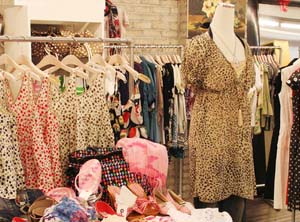
Indeed, fashion faces a paradox that is not new. However, what makes this subject very attractive and considerably “young” in Brazil is that our stylists have been leaving the position of the “copiers” to be in the position of “copied”.
From the economic perspective, this can be very positive since the development of new trends and new designs are, most of the times, results of copying. Yes, it is a paradox. But most of the fashionists are inspired by former creations. For instance, Kate Middleton’s 2011 wedding dress inherited many of the significant elements of the iconic Grace Kelly’s dress of 1956. Starting a trend confirms a fashionista’s success, creative capacity and, consequently, growth in the fashion hierarchy.
Another point that was commented in the Seminar is the change of philosophy and the reach of fashion. Today, fashion is not about merely creating a beautiful dress. It is much more than that. It is to create a complete lifestyle, including restaurants to go, countries to visit and hotels to stay. Brazilian brands such as Osklen and Daslu are good examples of brands that have created a lifestyle.
And when do law and fashion interact? Since the beginning of the productive chain until the time the product is ready to be sold, there is intense interaction between them, even though the industry may not be fully aware of that, at least not in Brazil. Basic examples: (a) trademark matters because LYCRA is the brand of a fabric, not the generic designation of a fabric; (b) tax issues because everything is taxed and sometimes twice or thrice, maybe more; (c) regulatory matter because there are rules for labeling and every inch of sewn fabric (try CONMETRO resolution 02/2008 for a glimpse of the complexity). But these examples do not even scratch the surface as there are a plethora of employment issues to deal with, contracts to be drafted and sales agents to be hired. And I am not even talking about incorporating a company, opening a subsidiary or affiliate or obtaining the permits necessary to actually start operating a business.
On top of all that, there is also the never-ending issue involving the degree of protection of the new “creations”. What are the limits of this protection?
The answer is far from easy. Some allege that increased IP rights would be necessary in Brazil so that proper protection for fashion can be achieved. Others say that the design and style of a dress or a pair of jeans cannot be protected at all. It is true that it is very difficult to determine what can or cannot be protected in the fashion world but it is also true that the rules crafted to combat unfair competition are such that they usually create an efficient umbrella under which those who feel his/her work has been infringed can seek cover. One thing is for sure, though: the devil (or the angel, depending on your perspective) is in the details. More often than not they will determine where exactly in the process of creation, inspiration became usurpation.
For fashionistas I would leave this last advice: If copy is the raw material of fashion, invest in the details.
Dannemann Siemsen

Recognised as leaders in Intellectual Property in Latin America, we are a team of experts who has been dedicated to defending industrial and intellectual property since 1900. We operate throughout the world, encompassing first-rate civil and criminal advocacy, covering diverse areas of Law and all segments of industry. We are partners of large national and international companies.
Today we have offices in three Brazilian state capitals and we have gathered a team of practitioners that lead in knowledge of intellectual property, litigation, contracts and other areas of Law.
This allows us to advise our clients in the main legal proceedings, making us a strategic partner in the pursuit of innovation and knowledge.
We have more than 280 lawyers and an extensive team of Industrial Property Agents – an experienced and specialised technical team that is kept up-to-date with the transformations and demands of the market.
We are the support for innovation and knowledge.
We live in a dynamic world, where knowledge is decisive for any company to stand out in the market. We believe in the value of human capital and in creativity as a source of innovation.
With more than a century of experience and a wide range of services, we are proud to be the foundation for our clients to seek innovative and disruptive paths.
