


Unauthorized use of a celebrity image
By José A. Medina, Ferraiuoli LLC
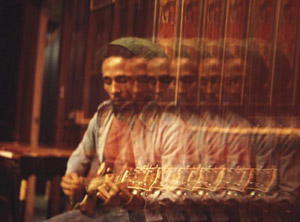
Hope Road is an entity owned by Bob Marley’s estate. Hope Road’s business consists of “acquiring and exploiting assets, rights, and commercial interests in the late Bob Marley.” Hope Road, as owner of Bob Marley’s persona, granted an exclusive license to another company, named Zion, to design, manufacture, and sell products with Marley’s image. A.V.E.L.A, on the other hand, sells competing Bob Marley merchandise and publishes artwork for use in retail stores. A.V.E.L.A’s merchandise eventually made its way into large retailers and Hope Road sued for trademark infringement soon after.
After a jury trial, it was determined that A.V.E.L.A.’s use of Bob Marley’s image infringed Hope Road’s trademark. Accordingly, the court ordered A.V.E.L.A. to pay $1.5 million to Hope Road. The court explained that ‘likelihood of confusion’ in celebrity cases is generally determined by applying the following eight factors: (1) the level of recognition that the celebrity has among the segment of the society for whom the defendant’s product is intended; (2) the relatedness of the fame or success of the celebrity to the defendant’s product; (3) the similarity of the likeness used by the defendant to the actual celebrity; (4) evidence of actual confusion; (5) marketing channels used; (6) likely degree of purchaser care; (7) defendant’s intent on selecting the [celebrity]; and (8) likelihood of expansion of the product lines.
Bob Marley’s image was found to have a high level of recognition among the target market. Hope Road showed that A.V.E.L.A. used some of the same marketing channels as Hope Road. As to evidence of actual confusion, Hope Road performed interviews with individuals at shopping malls that showed that 37 per cent of interviewees thought that A.V.E.L.A.’s merchandise was licensed by Marley’s estate.
One of the issues presented in the case was whether Bob Marley’s estate were attempting to overextend the Lanham Act into a federal right of publicity claim, an issue that was ultimately rejected by the court. In conclusion, this case is another example of the strong protection that the Lanham Act affords to celebrity images.
Ferraiuoli LLC

Ferraiuoli LLC (FLLC) was founded in 2003 by the late Blas Ferraiuoli-Martínez, Eugenio Torres-Oyola and María Marchand-Sánchez. This group was then joined in 2004 by Fernando J. Rovira-Rullán, thus forming the founding core of FLLC. FLLC has grown exponentially since its founding from a law firm with three attorneys and a support staff of three to its current size of 54 attorneys with a support staff of 38. Also, FLLC has grown from initially being known as an intellectual property and corporate law boutique law firm to a multiservice law firm that handles most matters relevant to a business while continuing to earn praise for its leading intellectual property and corporate practices.
FLLC has been ranked as a leading law firm in Puerto Rico by the professional publication Chambers Latin America in intellectual property, corporate, bankruptcy, labor & employment, real estate, and tax law. Moreover, 17 FLLC partners have been ranked as leaders in their field by the same publication. 4 FLLC partners are ranked as leaders in Intellectual Property, no other firm has more than 2. This recognition in such a short period of time is a tribute to FLLC’s business model.
FLLC prides itself in doing its work faster and more cost-efficiently yet with the same quality as that of its main competitors. The founding name partners are available at all times to attend to client matters. Their work ethic sets the tone for the rest of the firm. FLLC’s founders’ goal has been steady from the outset: become one of the premier multiservice law firms in Puerto Rico.
