Marcas
Rio de Janeiro court recognises infringement of BARLA talcum powder trade dress and orders immediate withdrawal of competing talcum powders
The Rio de Janeiro Judiciary has just handed down a ruling with major repercussions for the personal hygiene market and the intellectual property sector.
The judge of the 7th Business Court of the Capital District ruled that there had been misappropriation of distinctive visual elements.
By Dannemann Siemsen
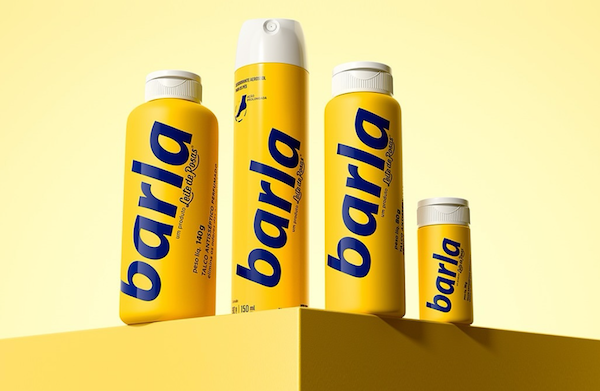
The decision, which originated in a lawsuit filed by Leite de Rosas, recognised that Perfumaria Márcia infringed the trade dress — or image set — of the traditional BARLA talcum powder when it launched a product with a visual identity extremely similar to that of the original.
In a dispute that had been going on for more than five years, the judge of the 7th Business Court of the Capital District ruled that there had been misappropriation of distinctive visual elements, such as the iconic combination of blue and yellow colours present on the packaging of BARLA talcum powder, in addition to the cylindrical shape and graphic layout of the elements.
The ruling ordered Perfumaria Márcia to immediately cease marketing the infringing product and withdraw the items available on the market, under penalty of a daily fine and a search and seizure order. The decision was strongly supported by a detailed expert report produced by Professor and Jurist Pedro Marcos Nunes Barbosa.
The expert visually compared multiple antiseptic talcum powders available on the Brazilian market and demonstrated, with robust technical grounds, that there is no market standard that justifies the joint use of the colours blue and yellow by Perfumaria Márcia. It was thus concluded that the choice of visual appearance was deliberately intended to take advantage of the market leadership and consolidated identity of BARLA talcum powder.
The study also highlighted that the visual elements appropriated by the competitor — when combined in the manner adopted — go beyond the functional realm and become part of a distinctive and protectable set. The ruling reinforces the understanding that trade dress protection goes beyond the registered trademark, extending to the visual aspect that imposes itself on the consumer's imagination.
More than a legal victory, the decision reaffirms the importance of protecting visual identity as an essential tool for market differentiation. In an industry where immediate consumer perception defines shelf space and purchasing decisions, safeguarding the image of traditional brands means protecting their history, value and competitive edge.
In this dispute, BARLA was represented by Dannemann Siemsen partners Roberta Xavier da Silveira Calazans, Roberta de Magalhães Fonteles Cabral and Caio Rocha de Ribeiro.


 Ingresar